

When a patient travels thousands of miles for care, their decision isn’t just about your hospital’s reputation; it’s about their personal feeling of safety and confidence. Price and procedure matter, but trust is the tiebreaker. In a global market made fiercely competitive by the rise of medical tourism and global patient mobility, how do you build that profound sense of trust from afar? This guide moves beyond theory to provide practical, actionable steps for building trust with international patients and making your clinic their clear and trusted choice.
Key Takeaways:
- Communicate clearly and proactively, offering multilingual support.
- Train your staff in cultural competence to provide personalized care.
- Showcase your online reputation through testimonials and reviews.
- Obtain and display international accreditations like JCI.
- Leverage technology with virtual consultations and secure portals.
- Partner with international insurers and physicians for referrals.
Understanding International Patients’ Needs
Before implementing any strategy, it’s crucial to step into the shoes of an international patient. Their concerns are unique and amplified by distance and unfamiliarity. Understanding these core needs is the first step in addressing them effectively.
1. Cultural and Language Barriers
Communication is the bedrock of healthcare, yet it’s the first and most significant hurdle for international patients. This goes beyond simple translation. Different cultures have varying expectations about doctor-patient relationships, family involvement in medical decisions, and even non-verbal cues. A direct, concise communication style that is standard in one culture might be perceived as cold or dismissive in another. True cultural competence in healthcare involves training staff to recognize and adapt to these nuances, ensuring patients feel heard, respected, and understood.
2. Concerns About Safety and Quality
Patients are leaving their local healthcare ecosystem, which, for all its potential flaws, is familiar. Venturing abroad introduces a host of anxieties: Are the clinical standards as high? Is the technology up-to-date? What happens if something goes wrong? They are actively seeking reassurance that your facility meets or exceeds the quality of care they could receive at home. This makes objective proof of quality not just a bonus, but a necessity.
3. Transparency in Medical Costs and Procedures
Financial uncertainty is a major source of stress. International patients fear hidden costs, surprise bills, and a lack of clarity about what is included in their treatment package. A lack of transparency can instantly shatter trust. Providing clear, detailed, and all-inclusive cost breakdowns before they commit to travel is fundamental. This demonstrates integrity and respect for the patient’s financial planning.
Key Strategies to Build Trust with International Patients
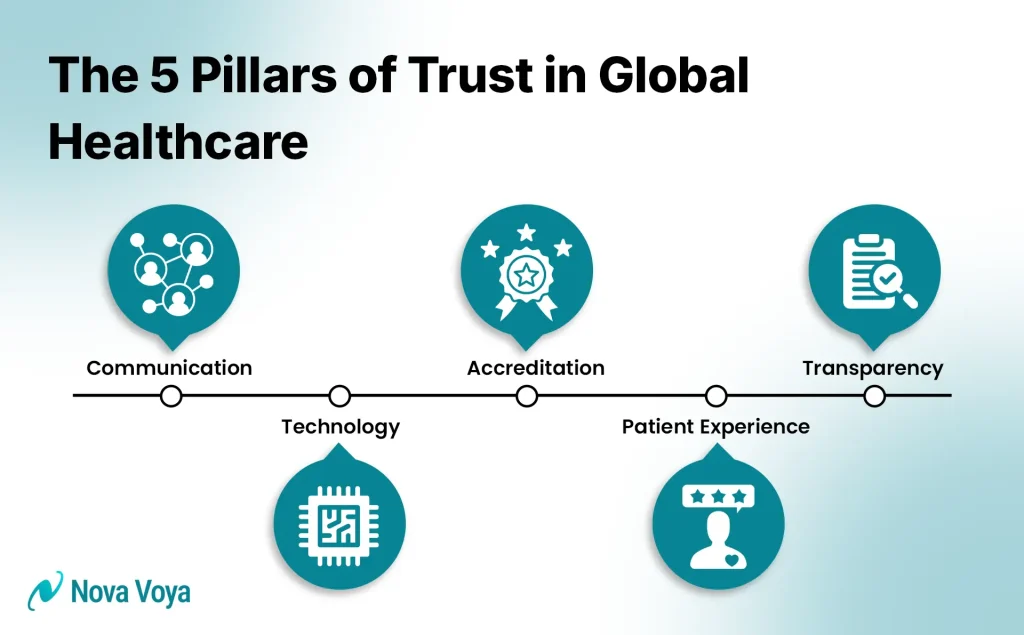
Addressing these core concerns requires a multifaceted approach. Here are the key pillars for building trust with international patients.
Clear and Transparent Communication
Proactive, clear, and empathetic communication is non-negotiable. Here’s how to translate this principle into practice:
- Multilingual Support: Consider investing in a dedicated team of multilingual international patient coordinators or utilizing professional medical interpretation services. Ensure all critical documents, from consent forms to post-operative care instructions, are available in the patient’s native language.
- Set Clear Expectations: From the very first inquiry, provide a clear timeline, detailed treatment plan, transparent pricing, and information about potential outcomes and risks.
- Responsive Channels: Offer multiple, easily accessible communication channels (e.g., dedicated email, WhatsApp, video calls) and ensure prompt responses to inquiries.

Culturally Competent Care and Staff Training
A truly welcoming environment respects a patient’s cultural background and heritage. Creating this environment involves two key pillars of action:
- Staff Education: Implement ongoing training programs for all staff—from clinicians to administrative personnel—on cultural sensitivity, communication styles, and the specific needs of your target patient demographics (e.g., dietary requirements, religious observances, family dynamics).
- Personalized Experience: Ask patients about their cultural and personal preferences upon admission. Simple gestures, like providing appropriate meal options or facilitating prayer times, can significantly enhance the patient experience in international healthcare.
Strong Online Presence with Testimonials and Reviews
For most international patients, your website and online presence are their first point of contact. This digital handshake must be firm and reassuring. To ensure it is, your online strategy should be built on three key elements:
- Professional Website: Your website should be professionally designed, easy to navigate, and available in multiple languages. It should clearly feature information about your team’s qualifications, available treatments, and technology.
- Authentic Testimonials: Feature high-quality video and written testimonials from past international patients. Hearing a story from someone from their own country can be incredibly powerful social proof.
- Online Reviews: Actively manage your online reputation on platforms like Google, Trustpilot, and healthcare-specific review sites. Respond professionally to both positive and negative reviews to show that you are engaged and committed to patient satisfaction.
Accreditation and International Certifications
Third-party validation is the most powerful tool for overcoming concerns about safety and quality. In practice, this means showcasing proof of excellence at both the institutional and individual levels:
- Seek Gold-Standard Accreditation: Pursue and prominently display accreditations from internationally recognized bodies like the Joint Commission International (JCI), Temos International Healthcare Accreditation, or relevant ISO certifications. These act as an unbiased seal of approval, signaling that your facility adheres to the highest global standards of patient care and safety.
- Highlight Staff Credentials: Showcase the international training, qualifications, and affiliations of your medical staff. This builds confidence in the expertise of your team.
Patient-Centric Services (Concierge, Translators, Aftercare Support)

Exceptional trust-building for hospitals abroad involves managing the entire patient journey, not just the clinical procedure. This means providing robust support before, during, and after their treatment through several key services:
- Concierge Services: Offer support beyond the hospital walls. This can include airport transfers, accommodation arrangements for the patient and their family, visa assistance, and local travel guidance.
- Dedicated Coordinator: Assign a single point of contact—an international patient coordinator—to guide the patient from their initial inquiry through their post-treatment follow-up. This personal touch prevents patients from feeling lost in the system.
- Robust Aftercare Plan: Trust doesn’t end when the patient leaves your facility. Provide a clear, comprehensive aftercare plan, establish communication channels for follow-up questions, and coordinate with their physician back home.
Leveraging Technology for Trust-Building with International Patients
Beyond the clinic itself, technology is a powerful tool for building trust long before a patient arrives. Effective modern medical tourism trust strategies should leverage technology in three key areas:
1. Virtual Consultations Before Travel
Offering a video consultation with the treating physician before the patient travels is a game-changer. It helps to:
- Build Personal Rapport: Puts a face to a name and establishes a human connection.
- Answer Critical Questions: Allows patients to address their medical concerns directly with the expert.
- Increase Confidence: Reduces the fear of the unknown and solidifies the decision to travel.
2. Secure Patient Portals and Data Protection
Demonstrating a commitment to data privacy is crucial. A secure online patient portal allows patients to safely upload medical records, view their treatment plan, and communicate with their care team. Highlighting your compliance with international data protection standards like GDPR shows professionalism and respect for patient confidentiality.
3. Digital Reputation Management
Proactively managing your online footprint is essential. This involves:
- Healthcare Reputation Management: Using tools to monitor what is being said about your brand online and engaging constructively.
- Search Engine Optimization (SEO): Ensuring that when potential patients search for treatments you offer, they find your high-quality, trustworthy content.
- Social Proof: Leveraging social media to share success stories, educational content, and behind-the-scenes looks at your facility to humanize your brand.
The Role of Partnerships and Networks
No clinic is an island! Building a powerful reputation abroad means leveraging the credibility of others through strategic partnerships. To do this effectively, focus on building relationships in three key areas:
- Collaborations with International Insurers and Facilitators: Partnering with major international health insurance providers or respected medical travel facilitators can act as a powerful endorsement. Patients who are clients of these organizations will inherently trust your hospital more, as you have already passed a rigorous vetting process.
- Building Referral Networks with Local Physicians Abroad: Establish relationships with physicians in your target countries. When a patient’s trusted local doctor recommends your facility, it provides an unparalleled level of reassurance. This can be fostered through medical conferences, collaborative research, and clear, professional communication channels for referring physicians.
- Leveraging Global Healthcare Ecosystems: Partnering with a comprehensive global healthcare platform builds significant credibility by connecting you to a network of trust. Platforms like Nova Voya achieve this by managing everything from patient referrals and medical tourism logistics to international staff recruitment and training. This holistic approach strengthens your reputation, making you the clear choice for both patients and top-tier talent.
Measuring and Improving Patient Trust
Building trust with international patients is not a one-time project but a continuous cycle. An effective framework for this involves systematically collecting feedback, tracking key performance indicators (KPIs), and committing to ongoing improvement based on that data.
1. Collecting Patient Feedback and Reviews
Systematically collect feedback at every stage of the patient journey using surveys like the Net Promoter Score (NPS). Actively encourage patients to leave reviews on independent platforms after their treatment.
2. Tracking KPIs Related to International Patient Satisfaction
Monitor key performance indicators (KPIs) such as:
- Patient satisfaction scores.
- Online rating averages.
- The number of positive testimonials generated.
- International patient referral rates.
3. Continuous Improvement in Patient Care
Use the data and feedback collected to identify areas for improvement. Create a formal process for reviewing patient feedback and implementing changes to enhance the international patient experience. This commitment to listening and evolving is the ultimate sign of a trustworthy organization.
Conclusion: Trust, the Cornerstone of Your Global Reputation
In the competitive international healthcare market, clinical excellence alone is not enough. The enduring success of your clinic is built on a foundation of trust. By implementing the strategies discussed, from clear communication and cultural competence to showcasing verified quality, you transform a patient’s anxiety into confidence and an inquiry into a lifelong advocate for your brand.
Implementing these patient-centric strategies at a global scale requires dedication and the right partners. Platforms like Nova Voya are designed to be that partner, creating a trusted ecosystem that simplifies the entire journey, from coordinating patient care and logistics to helping you recruit world-class international talent. Ultimately, this commitment to a holistic, trust-based approach is what transforms a good clinic into a globally recognized and sought-after healthcare destination.
Enhance your clinic’s global reputation and start with these strategies today.
Frequently Asked Questions
Trust is built on clear communication, internationally recognized accreditation, cultural respect, positive patient reviews, and comprehensive support that covers the entire patient journey.
Hospitals can improve communication by providing multilingual support (staff and documents), assigning a dedicated patient coordinator, and using virtual consultations to build a relationship before travel.
It is crucial because it makes patients feel respected and safe. This directly improves their experience, reduces anxiety, and builds the foundational trust necessary for effective care.
Accreditation acts as an objective, internationally recognized guarantee of high safety and quality standards. It provides powerful and credible reassurance to patients unfamiliar with a foreign healthcare system.
Online reviews provide vital social proof. They offer unbiased insights from past patients that heavily influence a prospective patient’s perception of a hospital’s quality and trustworthiness.