
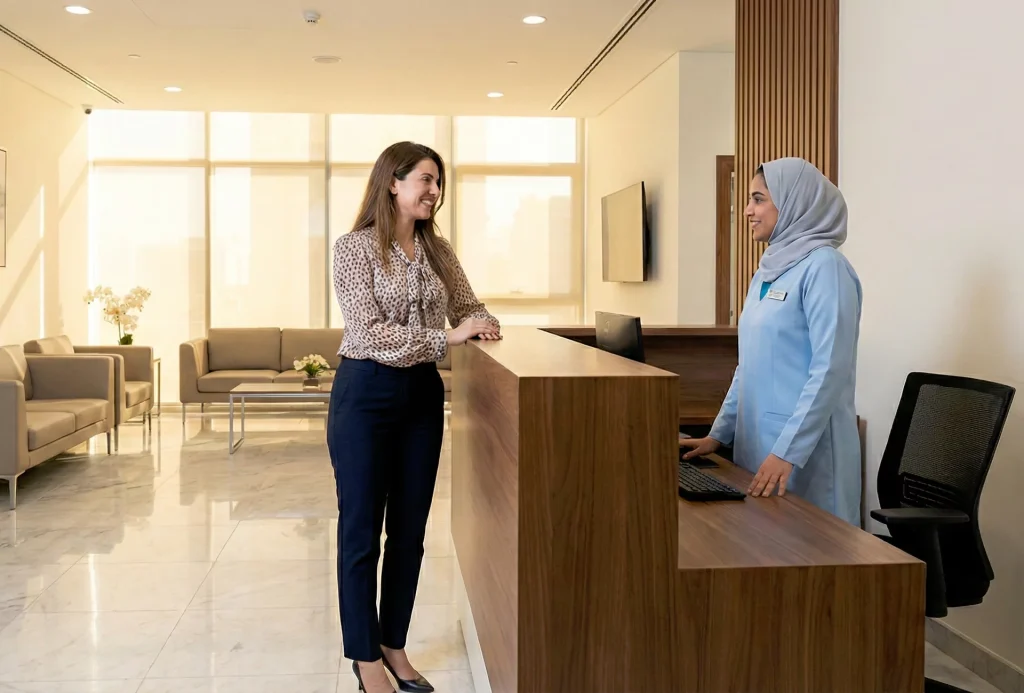
Traveling for healthcare is about more than just the procedure; it is about feeling comfortable in a new environment. When you arrive in Dubai or Abu Dhabi, you are entering a society that beautifully blends futuristic innovation with deep-rooted traditions. Understanding the cultural etiquette in UAE for medical tourists is the secret to a smooth, stress-free experience. While the UAE is incredibly welcoming to international visitors, small gestures of respect go a long way in building rapport with your medical team.
This guide will help you navigate everything from what to wear to your consultation to how to greet your surgeon. Think of this as an essential chapter in your UAE medical travel guide, ensuring your journey is as culturally seamless as it is clinically successful.
Culturally Vetted Medical Packages 🏥
Navigate your medical journey with confidence. Nova Voya partners exclusively with clinics that understand the needs of international patients, ensuring a respectful and seamless experience.
Start Your Journey
Secure your preferred dates with our culturally tailored packages.
View Medical Packages →*Verified Clinics Only
Key Takeaways (TL; DR)
- Dress Modestly: Cover shoulders and knees in clinic waiting rooms and public spaces.
- The Right Hand Rule: Always use your right hand for exchanging documents, credit cards, or greetings.
- Respect Gender Boundaries: Wait for a member of the opposite sex to initiate a handshake.
- Ramadan Awareness: Do not eat or drink in public waiting areas during daylight fasting hours.
- Strict Privacy: Never take photos of medical staff or other patients without explicit permission.
- Greetings Matter: A simple ‘As-salam alaykum’ builds instant rapport with your care team.
What is the Appropriate Dress Code for Hospital Visits?
In UAE healthcare settings, the dress code is ‘modest and respectful.’ This generally means wearing loose-fitting clothing that covers your shoulders and knees. While hospitals are not religious sites, they are public family spaces where conservative values apply. Avoid swimwear, sheer fabrics, or clothing with offensive slogans.
When you are applying for a UAE medical entry permit, you might picture the sunny beaches of Dubai, but your hospital visits require a different wardrobe. The UAE values modesty, and while the rules are relaxed in hotels, clinics, and hospitals are considered formal public spaces.
For men, long trousers or jeans with a polo shirt or button-down are perfect. For women, knee-length skirts, trousers, or maxi dresses with covered shoulders are ideal. This isn’t just about rules; hospitals in the UAE are kept very cool with air conditioning, so having a light layer or pashmina is practical for staying warm while waiting for your appointment.
If you are visiting a clinic located inside a mall, this rule is strictly enforced by security at the mall entrances. If your outfit is deemed too revealing (like short shorts or a tank top), you might be politely turned away, which could make you late for your consultation. Dressing the part shows respect to the local families sharing the waiting room with you.
Interacting with Medical Staff: Greetings and Gender Norms
When meeting your medical team, use formal titles like ‘Dr.’ or ‘Mr./Mrs.’ until invited to use first names. In gender relations, a good rule of thumb is to wait for the Emirati professional to extend their hand first. If they do not, a polite nod or placing your hand over your heart is the respectful alternative.
Emirati culture places a high value on courtesy and hierarchy. In many Western countries, we might rush into a business meeting or a medical consult with a firm handshake and a “Hi, how are you?” In the UAE, interactions often start with a bit more formality.
It is common to exchange polite inquiries about health and well-being before diving into the medical specifics. This builds trust. If your doctor or nurse is of the opposite gender, be observant. Some Muslim professionals prefer not to shake hands with the opposite sex for religious reasons. This is not a sign of unfriendliness; it is a sign of modesty. By waiting for them to initiate the greeting, you avoid any awkwardness.
Using a few words of Arabic can also work wonders. A simple “As-salam alaykum” (Peace be upon you) is a universal greeting that is deeply appreciated. It signals that you are making an effort to connect with the culture, which is a core aspect of successful Medical tourism in Dubai experiences.
Ramadan Etiquette in the UAE: Can I Eat or Drink in the Clinic?
During the Holy Month of Ramadan, eating, drinking, and smoking in public areas are strictly prohibited between sunrise and sunset. This applies to hospital waiting rooms and lobbies. However, hospitals will have designated screened-off areas or cafeterias where non-fasting patients can eat privately.
If your medical trip coincides with Ramadan, the city transforms. It is a time of spiritual reflection and fasting for Muslims. As a medical tourist, you are not expected to fast, but you are expected to respect those who are.
Refraining from sipping water or snacking in the main reception area is a major part of cultural etiquette in UAE for medical tourists. If you need to take medication with water, do so discreetly or ask a nurse to direct you to a private area.
Be aware that clinic hours often change during this month. Many medical centers operate on split shifts—opening for a few hours in the morning and then reopening late into the evening, sometimes until midnight. Always double-check your appointment times.
| Feature | Regular Days | Ramadan (Holy Month) |
| Eating in Public | Allowed everywhere | Prohibited during daylight hours |
| Clinic Hours | Standard (e.g., 9 AM – 6 PM) | Often split (e.g., 10 AM – 2 PM & 8 PM – 12 AM) |
| Atmosphere | Busy, energetic | Quieter days, festive nights |
| Staff Availability | Full rotation | Adjusted rotations for fasting staff |
For more information, you can read our article about “Ramadan in Dubai”.
Privacy Laws in UAE: The ‘No-Photo’ Rule in Healthcare
UAE privacy laws are extremely strict regarding photography. It is illegal to take photos of strangers, medical staff, or government buildings without explicit consent. In a hospital setting, taking a selfie that accidentally includes a nurse or another patient in the background can lead to serious legal consequences.
We all love to document our journeys, especially when traveling for a major life event like cosmetic surgery or a dental makeover. However, you must be very careful with your smartphone inside medical facilities.
The UAE treats individual privacy as a paramount right. Posting a photo on social media that includes someone else’s face without their permission is considered a cybercrime. When you are in the clinic, focus on your own recovery. If you want a photo with your surgeon to celebrate your successful procedure, simply ask them first. Most will be happy to oblige if it is done in a private setting like a consultation room, ensuring no other patients or staff are captured in the frame.
Social Customs in UAE: The Significance of the Right Hand
In Arab culture, the left hand is traditionally considered unclean as it was historically used for hygiene. Therefore, always use your right hand for eating, shaking hands, passing documents, or handing over your credit card at the reception desk. This small gesture is noticed and appreciated.
It might seem like a tiny detail, but using your right hand is a fundamental part of local etiquette. Whether you are signing consent forms, handing your passport to the admission team, or accepting a cup of Arabic coffee (Gahwa) offered in the lobby, reach out with your right hand.
If you are left-handed, don’t panic. Locals understand that visitors may not know every rule. However, making the effort to switch to your right hand for these interactions shows a level of cultural sophistication that sets you apart as a respectful guest. It aligns perfectly with the warm hospitality you will receive, transforming a transactional medical visit into a respectful human exchange.
Ready to plan a stress-free medical trip? Book your Free Consultation with Nova Voya today.
Have you ever traveled to a country with different customs for a medical procedure? What was your biggest challenge?
Frequently Asked Questions
Yes, generally. While traditional laws prohibit cohabitation, most international hotels in Dubai and Abu Dhabi do not ask for marriage certificates from tourists. However, it is always best to maintain discretion and check your specific hotel’s policy if you are staying in a very conservative area.
It is better to avoid short shorts. While Dubai is relaxed, a dental clinic is a professional medical environment. Knee-length shorts are usually acceptable for men, but long trousers are safer. For women, it is recommended to wear clothing that covers the knees and shoulders to ensure you are not turned away by building security.
Tipping medical professionals is not expected or required in the UAE. However, showing appreciation through a sincere ‘thank you’ or a positive review is highly valued. If you wish to thank the nursing staff, a small box of chocolates or dates for the team is a culturally appropriate gesture.
Alcohol is legal for non-Muslims in licensed venues (hotels, bars) and can be purchased for home consumption with a license. However, from a medical perspective, your doctor will likely advise against alcohol before and after surgery to ensure proper healing and avoid interactions with medication.
Generally, no. Scheduled surgeries proceed as planned. However, you may notice a brief pause in administrative activities or waiting times during prayer calls (which happen five times a day), as staff take turns to pray. This is a normal part of the daily rhythm in the UAE.