
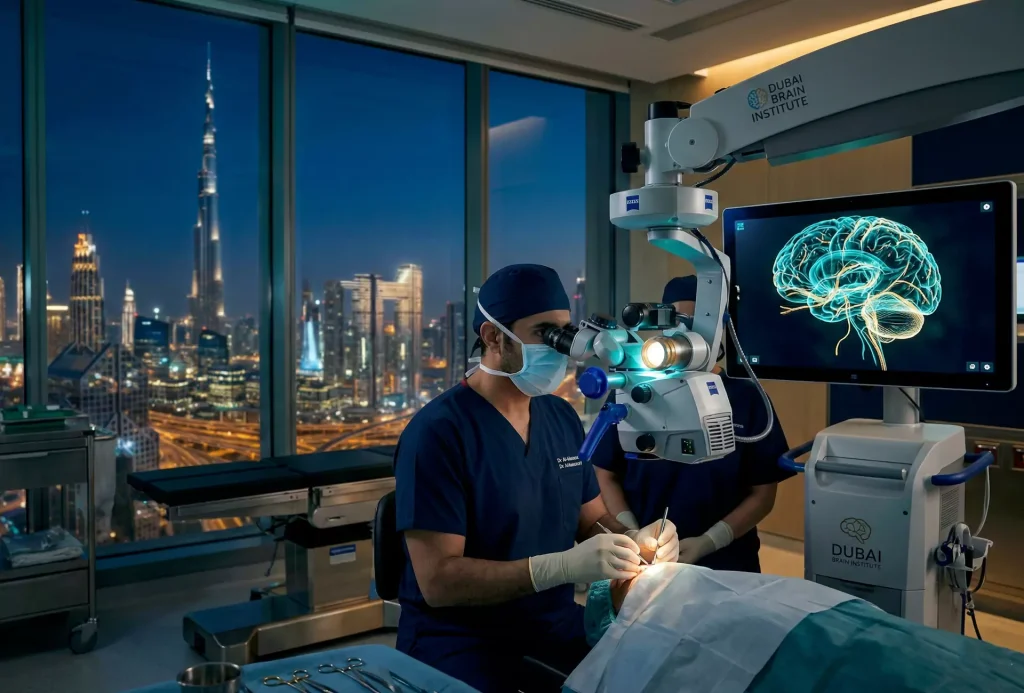
Facing a neurological diagnosis requires immediate, precise, and expert care. Finding the right specialist and a safe facility is your primary goal. Neurosurgery in Dubai provides access to world-renowned neurosurgeons, cutting-edge technology, and comprehensive treatment plans. This detailed guide covers treatments, recovery phases, and how to plan a stress-free medical journey for brain tumors and cerebral aneurysms.
What You Will Learn (TL; DR)
- Expert Care: Dubai is a leading hub for complex neurological procedures, featuring JCI-accredited hospitals and highly specialized surgeons.
- Clear Definitions: Understand exactly what brain tumors and aneurysms are, including specific types like a fusiform aneurysm.
- Treatment Options: Explore modern surgical methods, from traditional brain aneurysm surgery to minimally invasive brain aneurysm treatment without surgery.
- Recovery and Survival: Get honest information about the brain aneurysm surgery survival rate, expected outcomes, and the rehabilitation process.
- Seamless Travel: Learn how platforms like Nova Voya connect you directly with top healthcare providers in Dubai.
Exclusive Neurosurgical Package in Dubai
Understanding Brain Tumors and Aneurysms
Brain tumors and aneurysms are distinct neurological conditions, but both require highly specialized medical intervention. A brain tumor is an abnormal growth of cells inside the skull, while an aneurysm is a weak, bulging spot on the wall of a brain artery.
The human brain controls every function of the body. Any disruption to its delicate ecosystem—whether from the pressure of a growing tumor or the risk of a bursting blood vessel—demands immediate and accurate diagnosis. Dubai’s medical infrastructure is equipped to handle these complex diagnoses rapidly, offering clarity and a distinct path forward for patients and their families.
What is a Brain Tumor?
A brain tumor is a mass of abnormal cells multiplying in the brain or spinal cord. Tumors can be benign (non-cancerous) or malignant (cancerous). Even benign tumors pose severe risks because the skull has limited space; as the tumor grows, it creates pressure that can damage healthy brain tissue.
Tumors are generally classified into two main categories:
- Primary Brain Tumors: These originate in the brain tissue itself. Common types include gliomas, meningiomas, and pituitary adenomas.
- Secondary (Metastatic) Brain Tumors: These occur when cancer cells spread (metastasize) to the brain from another organ, such as the lungs, breasts, or colon.
Symptoms depend heavily on the tumor’s size and location. A patient might experience severe, persistent headaches, unexplained nausea, vision problems, balance issues, or changes in personality and speech.
What is a Brain Aneurysm?
A brain aneurysm (cerebral aneurysm) is a weak spot in a blood vessel inside the brain that balloons out and fills with blood. If the pressure becomes too great, the aneurysm can leak or rupture, causing life-threatening bleeding into the brain.
Many people live with small, unruptured aneurysms without ever experiencing symptoms. These are often discovered incidentally during imaging for other conditions. However, a ruptured aneurysm is a severe medical emergency. The primary symptom of a rupture is an incredibly sudden and severe headache, often described by patients as the “worst headache of their life.”
Understanding Different Types of Aneurysms
Aneurysms take different shapes depending on how the blood vessel wall weakens. Knowing the exact shape helps neurosurgeons decide on the best surgical approach.
- Saccular Aneurysm: Often called a “berry” aneurysm, this is the most common type. It looks like a small berry hanging by a narrow stem from the main blood vessel.
- Fusiform Aneurysm: A fusiform aneurysm bulges out on all sides, forming a widened, spindle-shaped area along the entire circumference of the blood vessel. Because it lacks a narrow neck, it requires different surgical techniques than a saccular aneurysm.
- Mycotic Aneurysm: This rare type is caused by a bacterial or fungal infection that attacks and weakens the artery wall.
Why Choose Dubai for Your Neurological Care?
Dubai combines world-class medical talent with state-of-the-art infrastructure. Choosing neurosurgery in Dubai means gaining access to globally trained specialists, luxury medical facilities, and stringent safety standards regulated by the Dubai Health Authority (DHA).
Navigating healthcare in a foreign country can feel intimidating. This is where Nova Voya steps in. We act as your friendly guide to a world of healthcare without borders. At Nova Voya, we simplify the medical travel process, connect patients with trusted providers, and ensure you receive top-quality care combined with complete confidence. You can easily reach out to Nova Voya to arrange your travel to Dubai and access exclusive service packages from premier health providers at special rates.
Brain Tumor Surgery in Dubai
Surgery is often the first line of treatment for a brain tumor. The goal is to remove as much of the tumor as safely possible without damaging surrounding healthy brain tissue.
Dubai hospitals utilize multidisciplinary tumor boards. This means neurosurgeons, oncologists, radiologists, and pathologists collaborate to create a highly personalized treatment plan before you ever enter the operating room.
Step-by-Step: The Diagnostic Process
Accurate diagnosis dictates the entire surgical strategy. Modern neurosurgery relies heavily on advanced imaging to map the brain before a single incision is made.
- Neurological Exam: The doctor tests your vision, hearing, balance, coordination, strength, and reflexes.
- MRI (Magnetic Resonance Imaging): This is the standard tool for evaluating brain tumors. It provides highly detailed images of the brain’s soft tissues. Sometimes, a special dye is injected into a vein to make the tumor show up more clearly.
- CT Scan (Computed Tomography): CT scans use X-rays to create cross-sectional images. They are beneficial for spotting calcium deposits in a tumor or evaluating the skull bone structure.
- Biopsy: A small sample of the tumor tissue is removed and examined under a microscope. This is the only definitive way to determine if a tumor is benign or malignant, and exactly what type of cells are involved.
Advanced Surgical Techniques for Tumors
Surgical approaches vary drastically based on the tumor’s location. Neurosurgeons in Dubai employ minimally invasive and highly precise methods to protect brain function.
1. Craniotomy
A craniotomy is the most common surgical approach for brain tumors. The surgeon temporarily removes a piece of the skull (bone flap) to access the brain. After the tumor is removed, the bone flap is replaced and secured with small plates and screws.
2. Awake Craniotomy
If the tumor is located near areas of the brain that control critical functions like speech, movement, or language, the surgeon may perform an awake craniotomy. The patient is sedated for the opening and closing of the skull but is awakened during the tumor removal. The surgical team asks the patient to speak, read, or move their limbs. This real-time feedback ensures the surgeon is not damaging vital functional areas.
3. Neuro-Navigation and Microsurgery
Neurosurgeons in Dubai utilize advanced computer-assisted neuro-navigation. Similar to a GPS system for the brain, it uses preoperative MRI scans to guide the surgeon’s instruments with millimeter precision. Combined with powerful operating microscopes (microsurgery), this allows for the safe removal of tumors that are deeply embedded or near sensitive structures.
4. Managing Tumor Complications: Hydrocephalus
Hydrocephalus is a condition where excess cerebrospinal fluid (CSF) builds up within the cavities (ventricles) of the brain. Brain tumors can block the normal flow of CSF, leading to this dangerous pressure buildup.
If a patient develops hydrocephalus, the neurosurgeon must address the fluid buildup to relieve pressure. This is often done by surgically inserting a shunt, a flexible plastic tube, that drains the excess fluid from the brain to another part of the body, usually the abdomen, where it is safely absorbed.
Brain Aneurysm Treatment Options
Treating a brain aneurysm requires careful consideration of the aneurysm’s size, location, and whether it has ruptured. Surgery for aneurysm aims to stop blood from flowing into the weakened area, preventing a rupture or stopping an active bleed.
Deciding on the exact approach for aneurysm surgery brain procedures is complex. Dubai’s neurosurgeons evaluate the patient’s overall health, the aneurysm’s characteristics, and the risks of intervention versus observation to recommend the safest path forward.
1. Watchful Waiting (Observation)
Not all aneurysms require immediate surgery. For very small, unruptured aneurysms that are not causing symptoms, the safest approach may be regular monitoring.
The neurosurgeon will schedule periodic MRI or CT angiograms to check if the aneurysm is growing. During this time, the patient must aggressively manage risk factors. This includes strictly controlling blood pressure, quitting smoking, and avoiding stimulant drugs, as these factors drastically increase the risk of a rupture.
2. Microvascular Clipping (Brain Aneurysm Surgery)
Microvascular clipping is a highly effective, traditional open brain aneurysm surgery. It is often the preferred method for certain types of aneurysms or those that have already ruptured.
The surgeon performs a craniotomy to access the brain. Using an operating microscope, they carefully navigate through the brain tissue to locate the blood vessel feeding the aneurysm. A tiny metal clip, resembling a very small clothespin, is placed across the neck of the aneurysm. This pinches the aneurysm off from the main artery, completely stopping blood flow into the bulging sac and preventing future bleeding.
3. Endovascular Coiling (Brain Aneurysm Treatment Without Surgery)
Endovascular coiling is a minimally invasive alternative to open surgery. Many patients refer to this as brain aneurysm treatment without surgery because it does not require opening the skull.
Instead of a craniotomy, the surgeon makes a small incision in the groin or wrist and inserts a hollow plastic tube called a catheter into an artery. Using continuous X-ray guidance, the catheter is carefully threaded up through the body, into the neck, and finally into the brain aneurysm.
Once in place, a soft platinum wire is pushed through the catheter into the aneurysm. The wire coils up inside the sac, filling the space. This interrupts the blood flow and causes a blood clot to form around the coil, effectively sealing off the aneurysm from the artery.
4. Flow Diverters for Complex Aneurysms
Flow diversion is an advanced endovascular technique used primarily for large, wide-necked, or fusiform aneurysms where standard clipping or coiling might not work well.
Instead of placing coils inside the aneurysm sac, the surgeon places a specialized stent (a tight mesh tube) in the parent blood vessel, directly across the opening of the aneurysm. This stent alters the blood flow, directing it straight past the aneurysm rather than into it. Over time, the lack of blood flow causes the aneurysm to shrink and heal, while new tissue grows over the stent, reconstructing the artery wall.
Comparing Aneurysm Treatments
| Feature | Microvascular Clipping | Endovascular Coiling | Flow Diversion |
| Surgical Approach | Open surgery (Craniotomy) | Minimally invasive (Catheter) | Minimally invasive (Catheter) |
| Mechanism | Metal clip pinches off the aneurysm neck. | Platinum coils fill the aneurysm sac. | Stent redirects blood flow past the aneurysm. |
| Best Used For | Saccular aneurysms, ruptured aneurysms, accessible locations. | High surgical risk patients, difficult-to-reach locations. | Large, wide-necked, or fusiform aneurysms. |
| Recovery Time | Longer (typically 4-6 weeks or more). | Shorter (often 1-2 weeks for unruptured). | Shorter (similar to coiling). |
Survival Rates and Expected Outcomes
Understanding the outcomes of brain surgeries is crucial for setting realistic expectations. The brain aneurysm surgery survival rate and recovery timeline depend entirely on one critical factor: whether the aneurysm was treated before or after it ruptured.
Unruptured aneurysm treatments have exceptionally high success rates. However, a ruptured aneurysm is a life-threatening emergency that causes immediate damage to the brain.
Outcomes for Unruptured Aneurysms
If an aneurysm is detected and treated before it bursts, the prognosis is generally excellent. The survival rate for surgical clipping or endovascular coiling of an unruptured aneurysm is very high, often exceeding 95% to 98%.
Patients usually experience a full recovery and return to their normal lives. The hospital stay is relatively short (a few days), and the primary focus during recovery is allowing the incision sites to heal and monitoring for any immediate post-procedure complications.
Outcomes for Ruptured Aneurysms
A ruptured aneurysm is a devastating event. When blood spills into the space around the brain (subarachnoid hemorrhage), it causes immediate pressure and chemical irritation.
The brain aneurysm surgery survival rate drops significantly if a rupture occurs. Approximately 40% of ruptured aneurysms are fatal, and among those who survive, about 66% suffer some degree of permanent neurological deficit.
Surgery for a ruptured aneurysm is done urgently to prevent a second bleed, which is often fatal. The recovery process is long and unpredictable. Patients spend weeks in the Intensive Care Unit (ICU) managing severe complications.
Managing Post-Rupture Complications
Two major complications dictate the recovery path after a rupture:
- Vasospasm: The blood vessels in the brain irritated by the hemorrhage can clamp down and narrow (spasm). This restricts blood flow to healthy brain tissue, potentially causing a secondary stroke. This requires aggressive ICU management.
- Hydrocephalus: As mentioned earlier, the spilled blood can block the normal drainage of cerebrospinal fluid, requiring the placement of a shunt to relieve pressure.
A Note on Other Vascular Surgeries: Aortic Aneurysms
While neurosurgeons focus exclusively on the brain and spine, the advanced hospitals in Dubai offer comprehensive care for the entire vascular system. Patients researching aneurysms often have questions about other types, specifically the aortic aneurysm.
An aortic aneurysm is a bulge in the aorta, the massive main artery carrying blood from the heart to the rest of the body. While conceptually similar to a brain aneurysm (a weakened, bulging blood vessel wall), it occurs in the chest or abdomen and is treated by cardiovascular surgeons, not neurosurgeons.
Aortic Aneurysm Surgery and the Bentall Procedure
Aortic aneurysm surgery is a major cardiovascular intervention to prevent the aorta from tearing or rupturing.
If the aneurysm occurs in the ascending aorta (the part closest to the heart) and involves the aortic valve, surgeons may perform a specific, complex open-heart surgery known as the Bentall procedure.
The Bentall procedure involves replacing the diseased ascending aorta and the aortic valve with a synthetic graft holding a new artificial valve. The coronary arteries are then reattached to this new graft. Just as Dubai is a hub for neurosurgery, its cardiovascular centers are highly equipped to perform intricate life-saving operations like the Bentall procedure with excellent outcomes.
Brain Surgery Recovery in Dubai: The Patient Journey
Undergoing neurosurgery in Dubai is a highly structured process designed to maximize patient safety and promote healing. From the moment you wake up to your final discharge, a dedicated multidisciplinary team supports you.
Recovery is not a race. The brain heals slowly, and patients must practice patience and strictly follow their medical team’s advice.
1. Immediately After Surgery: The ICU
Following any major brain procedure, patients are immediately transferred to the Neurological Intensive Care Unit (Neuro-ICU).
Expect close, continuous monitoring. Nurses will frequently check your vital signs, pupil responses, and ability to follow simple commands (like squeezing a hand or moving your toes). This intensive observation allows the medical team to spot and treat any complications, such as swelling or bleeding, immediately.
If you had a craniotomy, your head will be bandaged, and you will likely experience a significant headache and localized pain. The team will administer careful pain management to keep you comfortable without heavily sedating you, as they need to assess your neurological status clearly.
2. Moving to the General Ward
Once stable, usually after a few days, you transition from the ICU to a regular hospital ward.
Here, the focus shifts toward mobilization. You will be encouraged to sit up, get out of bed, and start walking small distances. A physical therapist will evaluate your strength and balance. If the surgery impacted your speech or swallowing, a speech-language pathologist will begin working with you. The hospital stay duration depends on the procedure type and your healing pace.
3. Neurological Rehabilitation
Rehabilitation is the cornerstone of long-term recovery, especially if the tumor or aneurysm caused neurological deficits.
Rehab begins in the hospital and continues long after discharge. The goal is to help the brain rewire itself (neuroplasticity) and regain lost skills.
- Physical Therapy: Focuses on restoring gross motor skills, walking, balance, and overall physical strength.
- Occupational Therapy: Helps you regain fine motor skills needed for daily activities like dressing, eating, and bathing.
- Cognitive Therapy: If memory, concentration, or problem-solving skills were affected, cognitive therapists provide exercises to sharpen mental function.
How Nova Voya Simplifies Your Medical Journey
Traveling for complex neurosurgery requires meticulous planning. Dealing with medical records, visas, accommodation, and hospital appointments can add unnecessary stress to an already challenging situation.
Our mission at Nova Voya is empowering your choices. Your health journey should be firmly in your hands. We place control in your grasp by providing a seamless platform, expert guidance, and a carefully selected network of the world’s best medical providers.
We do not just hand you a list of hospitals; we empower you with the knowledge and logistical support necessary to make confident decisions.
Connecting You with Top Health Providers
Nova Voya collaborates with a wide range of premium health providers across Dubai. We understand that finding the right doctor is critical.
Through our platform, you can access detailed profiles of specialists, view hospital accreditations, and directly book exclusive medical packages. We offer heavily negotiated, transparent packages for everything from complex craniotomies to comprehensive rehabilitation programs.
By combining affordability with top-quality care and stringent safety standards, Nova Voya ensures that receiving the right care, at the right place, and at the right time is your new reality. Reach out to Nova Voya today to discuss your medical travel needs and explore the best treatment packages Dubai has to offer.
Your Path to Neurological Recovery in Dubai
Neurosurgery in Dubai offers a beacon of hope for patients dealing with complex conditions like brain tumors and cerebral aneurysms. The combination of globally recognized neurosurgeons, JCI-accredited facilities, and state-of-the-art technology, from neuro-navigation to endovascular coiling, ensures patients receive the highest standard of care.
Understanding your diagnosis, exploring the surgical and minimally invasive treatment options, and committing to the rehabilitation process are key steps in your journey. With the support of specialized medical travel platforms like Nova Voya, navigating this complex landscape becomes a seamless, stress-free experience, allowing you to focus entirely on your healing and recovery.
What are your thoughts on this? Have you or a loved one ever traveled abroad for specialized medical care? Let us know about your experience in the comments below!
Frequently Asked Questions (FAQs)
Endovascular coiling typically takes 2 to 4 hours, while complex open surgeries (craniotomy/clipping) can take 4 to 8 hours, depending on the aneurysm.
Yes, if it’s benign and accessible. For malignant or deeply embedded tumors, surgeons may only safely remove a portion (debulking) and follow up with radiation or chemotherapy.
Most patients spend 3 to 7 days in the hospital. Full recovery at home, including bone healing and regaining energy, usually takes 4 to 8 weeks.
Generally, yes for small, unruptured aneurysms. However, you must get explicit medical clearance from your local neurologist before booking any flights.