
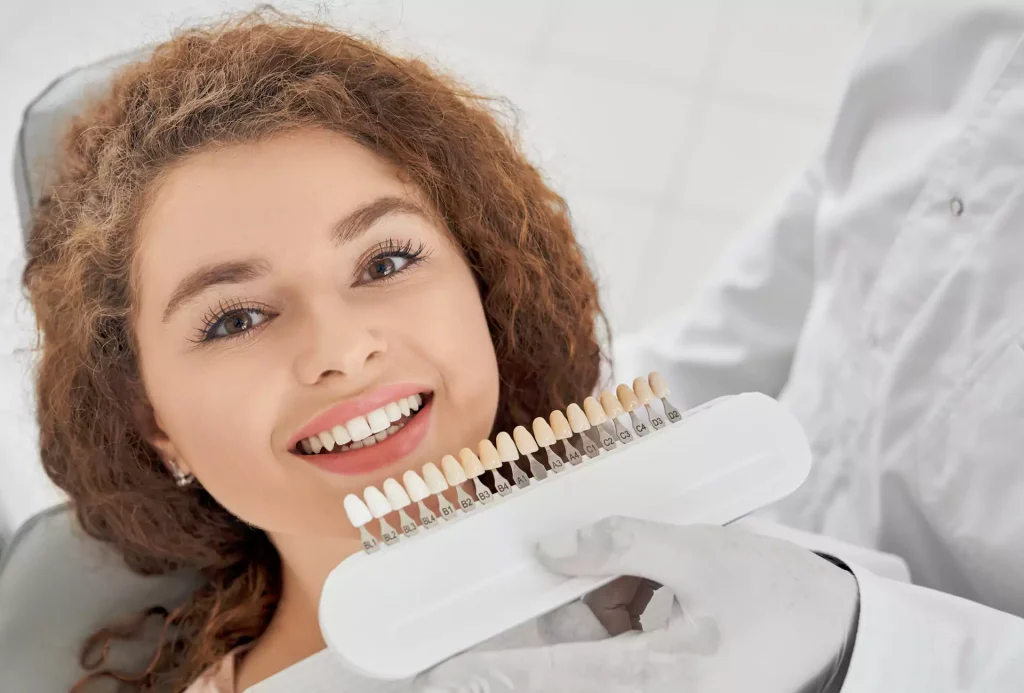
Ever wish you could hit a “reset” button on your smile? Whether dealing with chips, gaps, or stubborn stains, Dental Veneers offer a powerful solution. Once a temporary fix for 1920s Hollywood stars, they are now the gold standard for permanent smile makeovers. In this guide, we’ll walk you through everything from material types to the procedure, helping you decide if veneers are the right investment for your confidence.
- Key Takeaways (TL;DR)
- What Are Dental Veneers?
- Common Problems Veneers Can Fix
- Types of Dental Veneers: Which Is Right for You?
- The Dental Veneer Procedure: Step-by-Step
- Are Veneers Permanent? (The Truth About Enamel)
- Recovery and Aftercare: Living with Veneers
- Who is a Good Candidate for Dental Veneers?
- Veneers vs. Other Treatments
- Potential Risks and Downsides of Dental Veneers
- Summary
- Ready to Transform Your Smile?
- Frequently Asked Questions (FAQs)
Key Takeaways (TL;DR)
- What are they? Dental veneers are thin shells (like contact lenses for teeth) designed to cover the front surface of your teeth to improve appearance.
- Main Types: Beyond standard Porcelain and Composite, options now include No-Prep (Lumineers) and Removable Veneers.
- The Commitment: Traditional veneers are permanent because a small amount of enamel is removed.
- Lifespan: With proper care, porcelain veneers can last 10–15 years or more.
- Pain Level: The procedure is generally minimally invasive, often requiring little to no anesthesia.

What Are Dental Veneers?
Dental veneers are ultra-thin, custom-made shells made of tooth-colored materials designed to cover the front surface of teeth to improve your appearance.
Think of veneers like false fingernails, but for your teeth, and much more high-tech. They are bonded to the front of the teeth, changing their color, shape, size, or length. Unlike a crown (cap) that covers the entire tooth, a veneer only covers the visible front part.
According to the American Dental Association (ADA), veneers are primarily cosmetic, but they can also serve a functional purpose by protecting the surface of a damaged tooth. They are a versatile tool in cosmetic dentistry because they fix multiple issues at once.
Common Problems Veneers Can Fix
If you are feeling self-conscious about your smile, veneers can be an effective solution for a variety of dental imperfections, including:
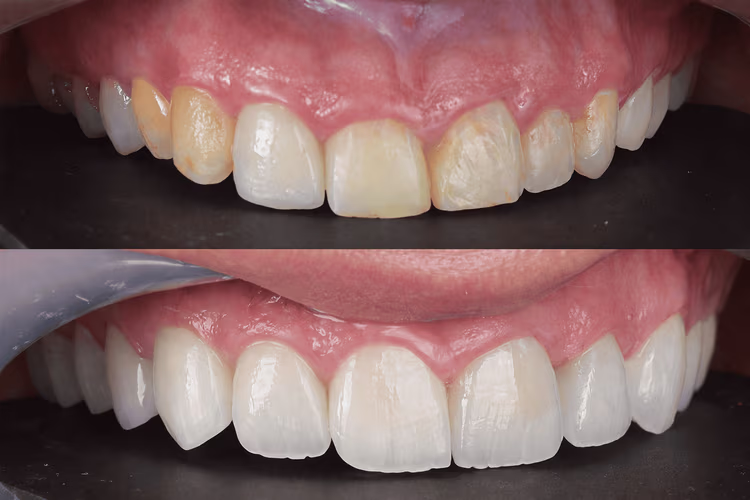
- Discoloration: Teeth stained from tetracycline or other drugs, excessive fluoride, or large resin fillings.
- Wear and Tear: Teeth that are worn down.
- Damage: Chipped or broken teeth.
- Misalignment: Teeth that are misaligned, uneven, or irregularly shaped (for example, have craters or bulges in them).
- Gaps: Closing spaces between teeth (diastema).
Types of Dental Veneers: Which Is Right for You?
Not all veneers are created equal. When you visit your dentist, the biggest decision you’ll likely make is choosing the material. The two main players in the game are Porcelain and Composite Resin.
1. Porcelain Veneers
These are the most common and durable types. They are made of high-quality ceramic that mimics the light-reflecting properties of natural teeth.
- Pros: Highly stain-resistant (coffee lovers, rejoice!), look incredibly natural, and very strong.
- Cons: The process takes longer (lab work required), and if they chip, the whole veneer usually needs replacement.
2. Composite Resin Veneers
These are made from a tooth-colored filling material bonded to the tooth.
- Pros: Can often be done in one visit, less enamel removal required, easier to repair if chipped.
- Cons: More prone to staining, not as durable as porcelain, may not look quite as translucent/natural.
3. No-Prep Veneers (e.g., Lumineers)
These are ultra-thin brands of porcelain (about as thin as a contact lens) that require little to no removal of tooth structure.
- Pros: Preserves natural tooth structure, potentially reversible, less invasive.
- Cons: Can sometimes look “bulky” if not done correctly, may not hide deep discoloration as well as thicker veneers.
Comparison Table: Porcelain vs. Composite vs. No-Prep
| Feature | Porcelain Veneers | Composite Resin Veneers | No-Prep (Lumineers) |
| Durability | High (10-15+ years) | Medium (5-7 years) | High (up to 20 years) |
| Stain Resistance | Excellent | Moderate | Good |
| Procedure Time | 2-3 Visits (requires lab) | 1 Visit (chairside) | 2 Visits |
| Enamel Removal | Requires removal | Minimal to none | None to Minimal |
| Reversibility | Irreversible | Often reversible | Often reversible |
| Aesthetics | Superior | Good | Good (can look bulky) |
The Dental Veneer Procedure: Step-by-Step
Getting porcelain veneers usually takes three trips to the dentist: one for a consultation and two to make and apply the veneers.
Here is exactly what happens when you sit in the chair.
Step 1: Diagnosis and Treatment Planning
This is the “dreaming” phase. You tell your dentist what you want to achieve. Do you want a blinding white Hollywood smile, or something natural that matches your age?
- What happens: The dentist examines your teeth to make sure veneers are appropriate. X-rays and impressions of your mouth may be taken.
Step 2: Preparation (The “Prep”)
To make room for the veneer so your tooth doesn’t look bulky, the dentist needs to remove a tiny amount of enamel.
- The Details: About 0.5 millimeters of enamel is removed from the tooth surface. This is roughly the thickness of the veneer itself.
- Anesthesia: You might get a local anesthetic to numb the area, but not always.
- Impressions: Once the tooth is shaved down, your dentist makes a model or impression of your tooth. This model is sent to a dental laboratory.
- Temporaries: Because it takes 2-4 weeks for the lab to build your permanent veneers, you might get temporary veneers to cover your prepped teeth.
Step 3: Bonding (The Big Reveal)
This is the exciting part. Your permanent veneers are back from the lab.
- Fit Check: Before bonding it permanently, your dentist will temporarily place it on your tooth to examine its fit and color. They might trim it slightly.
- Cleaning: Your tooth will be cleaned, polished, and etched. Etching roughens the tooth to allow for a strong bonding process.
- Cementing: A special cement is applied to the veneer, and the veneer is placed on your tooth.
- Curing: Once properly positioned, the dentist shines a special light beam on it to activate chemicals in the cement, causing it to harden deeply and quickly.
- Final Touches: Removal of excess cement and evaluation of your bite.
Premium Veneers Package
Are Veneers Permanent? (The Truth About Enamel)
Yes, traditional veneers are considered a permanent treatment because your natural tooth structure is altered.
Once the enamel is shaved off, it does not grow back. If a veneer breaks or wears out, it must be replaced; you cannot simply go back to your natural teeth.
However, there is a modern alternative called “No-Prep” Veneers (like Lumineers). These are ultra-thin and require little to no removal of tooth structure. They aren’t for everyone; they can sometimes look bulky if not done correctly, but they are an option if you are terrified of the drill.
Recovery and Aftercare: Living with Veneers
So, you have your new smile. Now, how do you keep it looking fresh?
Immediate Recovery
- Numbness: If you had anesthesia, your lips might feel numb for a few hours.
- Sensitivity: You might feel some sensitivity to hot and cold for a week or two due to the enamel removal. This usually passes.
Long-Term Maintenance Checklist
Treat them like your natural teeth, but with a little extra caution.
- Brush and Floss: Twice a day. You can’t get cavities in the veneer, but the tooth underneath can still rot.
- Avoid Hard Objects: Do not chew on ice, pens, or your fingernails. Porcelain is glass-like; it can shatter under extreme pressure.
- Watch the Stains: While porcelain resists stains, the cement holding them can discolor. Try to rinse your mouth after drinking red wine, coffee, or tea.
- Wear a Mouthguard: If you grind your teeth at night (bruxism), a night guard is mandatory to protect your investment.
Who is a Good Candidate for Dental Veneers?
Not everyone should get veneers. Medical experts at the Cleveland Clinic emphasize that you need to have healthy gums and teeth to qualify. Let’s break down who benefits most and who should look elsewhere.
Ideally, you have:
- Healthy gums (no gum disease).
- Sufficient tooth enamel (the veneer needs something to stick to).
- A commitment to good oral hygiene.
- Specific cosmetic goals (you know what you want to fix).
Veneers might NOT be for you if:
- You grind your teeth severely: You will chip the veneers quickly unless you are strict about wearing a guard.
- You have decayed teeth: The decay must be treated first. Veneers cannot be placed on top of active rot.
- You have severe misalignment: If your teeth are very crooked, orthodontics (like braces or Invisalign) might be a necessary first step.
Veneers vs. Other Treatments
Sometimes, you don’t need a full set of veneers. Here is how they stack up against other options.
Veneers vs. Crowns
- Coverage: A veneer covers only the front; a crown covers the entire tooth.
- Usage: Crowns are usually for teeth that are heavily damaged or have had a root canal. Veneers are mostly cosmetic.
- Thickness: Crowns require much more tooth reduction.
Veneers vs. Bonding
- Material: Bonding uses resin applied directly to the tooth (similar to composite veneers but usually for smaller repairs).
- Longevity: Bonding stains more easily and chips faster than porcelain veneers.
- Cost: Bonding is significantly cheaper but lasts half as long.
Veneers vs. Whitening
- Result: Whitening lightens your natural color. Veneers change the shape and color.
- Limitations: If you have deep, intrinsic gray stains, whitening won’t work well. Veneers will cover them completely.
Potential Risks and Downsides of Dental Veneers
We believe in transparency. Here are the things you need to consider before signing up.
- Sensitivity: As mentioned, removing enamel can make teeth sensitive to hot/cold.
- Color Matching: Once cemented, the color of the veneer cannot be changed. If you plan to whiten your other teeth, do it before getting veneers.
- Dislodging: Though rare, veneers can fall off. Save the veneer and call your dentist immediately; it can often be re-bonded.
- Irreversibility: We can’t stress this enough. It is a lifetime commitment to maintenance.
Summary
Dental veneers are a powerful way to redesign your smile. Whether you choose porcelain for its durability and stain resistance or composite for a quicker fix, the result is often a massive boost in self-esteem.
Remember, the goal isn’t just “perfect” teeth; it’s a smile that fits your face and personality.
If you are considering this procedure:
- Research: Look for a cosmetic dentist with a portfolio of “before and after” photos.
- Consult: Ask about your specific enamel health.
- Plan: Understand that this is a long-term relationship with your dental health.
Ready to Transform Your Smile?
Your dream smile is closer than you think. If you are tired of hiding your teeth in photos, it might be time to have a chat with a professional.
Not Sure Which Specialist in Dubai Is Right for You? 🏥
Nova Voya helps international patients navigate advanced medical care in Dubai, connecting you with top-tier specialists. We match you with surgeons and hospitals that are genuinely equipped for your specific medical needs, not just ones that list them on a website.
- ✔ Personalized matching with leading experts
- ✔ Support coordinating appointments, second opinions, and hospital logistics
- ✔ Independent guidance on procedure options
*Medical tourism guidance, not clinical advice
Have you ever considered cosmetic dentistry? What’s the number one thing holding you back: fear of the dentist or the permanence of the procedure? Let us know in the comments below!
Frequently Asked Questions (FAQs)
No, provided you go to a qualified professional. While some enamel is removed, the veneer actually reinforces the tooth and protects the front surface from decay. However, because the enamel doesn’t grow back, the tooth will always need a covering.
Most patients report very little pain. The preparation phase involves shaving enamel, so local anesthesia is usually used to prevent discomfort. The recovery is typically mild.
No. Whitening gels only work on natural enamel. If your veneers stain (which is rare for porcelain), they cannot be bleached back to white. You would need to replace them or have them professionally polished.
Porcelain veneers typically last between 10 to 15 years, and sometimes up to 20 with excellent care. Composite veneers usually last 5 to 7 years.
Yes, but cut them up first. While veneers are strong, biting directly into hard foods (like whole apples, raw carrots, or corn on the cob) creates leverage that can dislodge or chip them. Use your back teeth for chewing hard items.