

If you or your partner has been told that there are no sperm in the ejaculate (a condition called azoospermia), it can feel like the door to parenthood has closed. But for many men, a procedure called Micro-TESE (short for Microdissection Testicular Sperm Extraction, a surgical technique used to find and collect sperm directly from the testicle using a microscope) can change everything.
The challenge? Not every clinic that offers IVF or fertility services in Dubai is actually equipped to do Micro-TESE properly. Choosing the wrong clinic can mean a failed procedure, damaged tissue, or lost sperm samples that could never be recovered.
This guide breaks down exactly what Micro-TESE is, why the clinic you choose matters more than you might think, what factors to check before booking, and which doctors in Dubai are worth considering based on their specialties and experience.
- Key Takeaways: (TL;DR)
- What Exactly Is Micro-TESE, and Why Is It Different From Regular Fertility Treatment?
- What Are the Critical Factors That Make a Clinic Actually Ready for Micro-TESE?
- Key Factors to Consider When Choosing a Micro-TESE Clinic
- Does the Clinic Have a Quality System That Covers Male Fertility Surgery?
- Can the Clinic Do a Full Male Fertility Evaluation, Not Just a Basic Semen Test?
- Does the Clinic Have a Specialized Lab That Can Handle Surgically Retrieved Sperm?
- Is the Surgical Team Working Directly With the Lab Team?
- Does the Clinic Track Its Surgical Outcomes and Share Them?
- Are Male Patients Treated as Equal Partners in the Fertility Process?
- Which Clinics and Doctors in Dubai Are Worth Considering?
- Valiant Clinic Dubai – Dr. Ismail Abbara
- Dr. Ismail Abbara
- Kings College Hospital Dubai – Dr. Samer Obeidat
- Dr. Samer Obeidat
- Kings College Hospital Dubai – Dr. Shahzad Shah
- Dr. Shahzad Shah
- Kings College Hospital Dubai – Dr. Martin Peter Moody
- Dr. Martin Peter Moody
- IMH Dubai – Dr. Ali Mohammed Mohamednour
- Dr. Ali Mohammed Mohamednour
- AIC City Polyclinic – Dr. Houshiar Sijani
- Dr. Houshiar Sijani
- Myth vs. Reality: Navigating Micro-TESE and Male Infertility
- Summary
- FAQs
Key Takeaways: (TL;DR)
- Azoospermia does not automatically mean Micro-TESE. A full evaluation (hormones, genetics, imaging) must come first to confirm whether surgery is the right path.
- Not all fertility clinics are equipped for Micro-TESE. Look for clinics with dedicated andrology labs, experienced urologists, and coordinated surgical-lab teams.
- Ask about outcomes. Any serious clinic should be able to share their sperm retrieval success rate for non-obstructive azoospermia cases.
- Quality systems matter. Clinics that follow documented protocols and track performance are more reliable than those that rely on individual skill alone.
- Your role as the male partner matters. Seek a clinic that involves you fully in the diagnostic and treatment process from day one.
- Dubai has experienced urologists with andrology backgrounds. Several clinics listed below have declared male infertility expertise and the institutional backing to support complex cases.
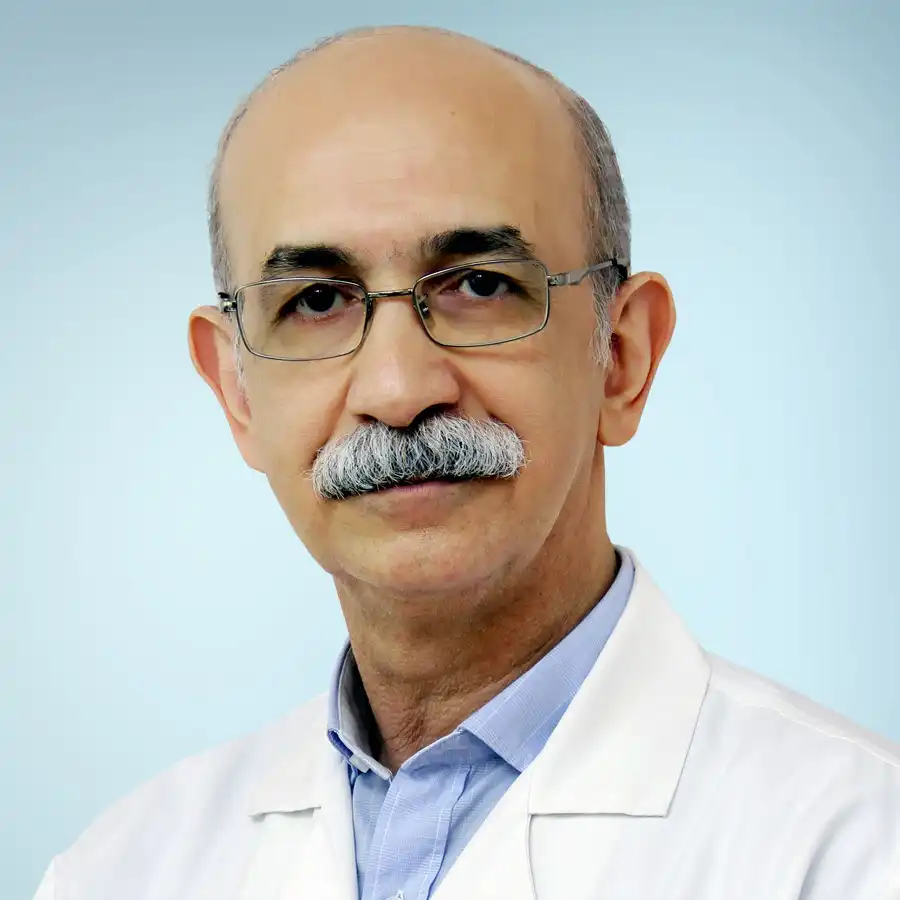
Dr. Houshiar Sijani
Specialist Urologist · 30+ Years Experience in Male Reproductive Health
What Exactly Is Micro-TESE, and Why Is It Different From Regular Fertility Treatment?
Most fertility treatments start with a simple semen sample. But when a man has azoospermia (no sperm in his ejaculate), that is not possible. The question then becomes: are there any sperm hiding inside the testicle itself?
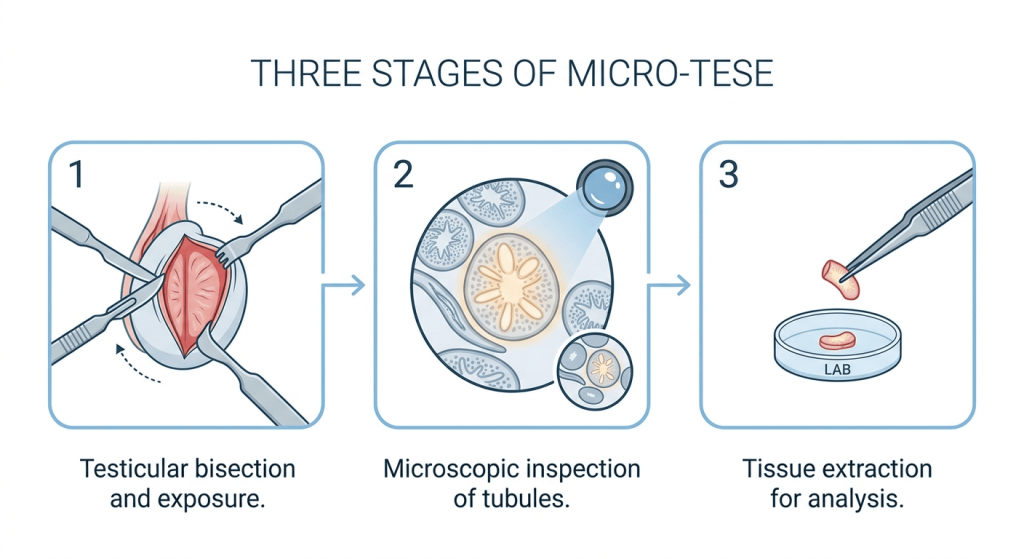
Micro-TESE is a surgical procedure where a urologist (a doctor who specializes in the urinary and reproductive system in men) uses a powerful microscope to look directly inside the testicle and carefully extract tiny areas that might still be producing sperm.
It requires a very steady hand, a highly trained surgeon, and a lab team standing by immediately to process whatever is found. It sits at the intersection of microsurgery and reproductive science, which is why it needs a very specific kind of clinical setup to be done safely and successfully.
Why Can’t You Just Walk Into Any IVF Clinic in Dubai for Micro-TESE?
This is where most patients make their first mistake.
Many clinics in Dubai offer IVF (In Vitro Fertilization, a process where an egg and sperm are joined outside the body in a lab) and advertise “male fertility services.” But that does not mean they are set up for complex microsurgical sperm retrieval.
According to research published in the International Brazilian Journal of Urology (2025), male infertility is involved in roughly half of all infertility cases. Yet it has historically received far less attention inside fertility programs.
Many centers still treat the male partner as a secondary concern rather than a full participant in the diagnostic and treatment process.
The same research notes that a high-quality fertility program must have structured processes to diagnose, evaluate, and manage male infertility as part of its core practice, not as an afterthought.
For Micro-TESE specifically, this means the clinic needs much more than a consultation room and an IVF lab.
What Are the Critical Factors That Make a Clinic Actually Ready for Micro-TESE?
Micro-TESE is one of the most technically demanding procedures in male fertility treatment, requiring precise coordination between urologists, embryologists, laboratory staff, and diagnostic specialists.
A clinic may advertise advanced technology or high success rates, yet still lack the systems, expertise, or teamwork needed to manage complex non-obstructive azoospermia cases properly.
That is why evaluating the clinic itself is just as important as evaluating the procedure. The factors below can help patients understand whether a center is truly equipped to deliver safe, evidence-based, and well-coordinated Micro-TESE care; from diagnosis and surgery to sperm handling, lab processing, and long-term support.
Key Factors to Consider When Choosing a Micro-TESE Clinic
| Factor | Why It Matters | Red Flag If Missing |
| Written Micro-TESE protocols | Ensures consistent, safe surgical technique | No standard procedure or documentation |
| Full male fertility evaluation | Determines correct diagnosis and best approach | Only offers basic semen test |
| Specialized andrology lab | Handles rare, fragile sperm from surgery | Lab only processes regular ejaculated samples |
| Surgeon-embryologist coordination | Preserves sperm viability after retrieval | Separate teams with no real-time communication |
| Outcome tracking and KPIs | Provides honest performance data | Cannot tell you their retrieval success rates |
| Male patient support and engagement | Keeps you informed and emotionally supported | Male partner is treated as secondary in the process |
Does the Clinic Have a Quality System That Covers Male Fertility Surgery?
A proper medical quality system (also called a Quality Management System or QMS) is a structured set of rules, checklists, and processes that a clinic follows to make sure care is consistent and safe.
Think of it as the difference between a kitchen that follows food safety rules every single time, versus one that just wings it.
For Micro-TESE specifically, the research article (2025) highlights that microsurgical procedures need standardized technique protocols, postoperative complication tracking, and coordination between surgical and laboratory teams.
Without this, results can vary widely between patients and even between surgeries at the same clinic.
Why it matters:
If there are no protocols, the sperm retrieval rate depends entirely on who happened to be in the room that day.
What to ask:
Does your clinic have written protocols for Micro-TESE, including how sperm is handled immediately after retrieval?
Can the Clinic Do a Full Male Fertility Evaluation, Not Just a Basic Semen Test?
A basic semen test tells you if sperm is present. It does not tell you why sperm is missing or what the best next step is. The 2025 research specifies that a truly qualified center must offer a comprehensive male evaluation that goes beyond basic semen analysis and includes hormonal testing, genetic evaluation, imaging, and testicular biopsy analysis.
Why it matters:
The type of azoospermia a patient has (obstructive, meaning a blockage is preventing sperm from leaving, versus non-obstructive, meaning the testicles are not producing enough sperm) completely changes whether Micro-TESE is even appropriate, and what the odds of success are.
What to ask:
“Before any surgery, will you evaluate my hormones, genetics, and imaging to confirm I am a good candidate for Micro-TESE?”
Does the Clinic Have a Specialized Lab That Can Handle Surgically Retrieved Sperm?
Sperm found during Micro-TESE is different from regular ejaculated sperm. It is often sparse (very few cells), immotile (not moving), and requires expert handling under a microscope.
The 2025 research article describes this process in detail: the lab team needs to carefully identify and isolate these rare sperm cells from testicular tissue, which requires specific skills and equipment.
The research also notes that IVF labs must be experienced in processing Micro-TESE specimens and applying advanced techniques like ICSI (Intracytoplasmic Sperm Injection, where a single sperm is injected directly into an egg). Without this, even successfully retrieved sperm can be lost.
Why it matters:
A surgeon can find sperm during the procedure, but if the lab team is not ready or experienced, those cells can be damaged or wasted.
What to ask:
“Does your embryology team have experience specifically processing Micro-TESE samples? How many have they handled?”
Is the Surgical Team Working Directly With the Lab Team?
Timing is everything in Micro-TESE. The moment sperm is retrieved from the testicle, it needs to go directly to an embryologist (the lab specialist who handles eggs and sperm) for immediate processing. This is not a relay race where teams hand off responsibilities at separate times. It requires real-time coordination.
The 2025 research article specifically highlights that one of the core competencies of a qualified center is scheduling and communication between surgical teams and embryologists, particularly when sperm retrieval must be synchronized with egg collection from the female partner.
Why it matters:
Poor team coordination means delays between retrieval and processing, which reduces sperm viability (how many survive and stay usable).
What to ask:
“Is your urologist and embryology team working together in real time during the procedure?”
Does the Clinic Track Its Surgical Outcomes and Share Them?
A clinic that does not measure its results cannot tell you honestly whether they are good at what they do. The 2025 research describes key performance indicators (KPIs) specific to male infertility, including surgical complication rates, sperm retrieval success rates, and fertilization rates using testicular sperm.
Why it matters:
You deserve to know what percentage of Micro-TESE procedures at this clinic result in successfully retrieved sperm, not just reassurances.
What to ask:
“What is your sperm retrieval success rate for non-obstructive azoospermia patients undergoing Micro-TESE?”
Are Male Patients Treated as Equal Partners in the Fertility Process?
The 2025 research article raises a concern that is easy to overlook: men are frequently made to feel like a secondary participant during fertility treatment. They receive little communication, minimal emotional support, and often feel sidelined. This is not just uncomfortable. It affects whether patients continue treatment.
A clinic that invests in male patient engagement, psychological support for situations like azoospermia, and clear communication throughout the process is a clinic that takes male fertility seriously at every level.
Why it matters:
Fertility treatment is emotionally exhausting. A clinic that supports you through it is more likely to get you to the finish line.
What to ask:
“Do you have a counselor or support resource specifically for male patients dealing with azoospermia?”
Which Clinics and Doctors in Dubai Are Worth Considering?
The following clinics and specialists appear in our research database as options worth exploring for urology and andrology care in Dubai, based on their declared specialties and experience profiles.
Valiant Clinic Dubai – Dr. Ismail Abbara
Dr. Ismail Abbara stands out because his background combines decades of surgical urology experience with a dedicated focus on andrology and male infertility. As a German Board Certified Consultant Urologist and Andrologist with nearly 45 years of experience, he has worked across highly specialized areas including microsurgery, male reproductive health, pediatric urology, renal transplantation, and uro-oncology.
For patients considering Micro-TESE, what makes his profile worth evaluating is the fact that male infertility and microsurgical treatment are specifically listed within his practice scope. His training at Frankfurt University Hospital, along with fellowships in Germany and the UAE, suggests exposure to structured European surgical and reproductive medicine systems.
He has also held leadership positions within regional urological organizations, including serving as Secretary-General of the Pan Arab Continence Society, reflecting long-standing involvement in the field beyond routine clinical practice.
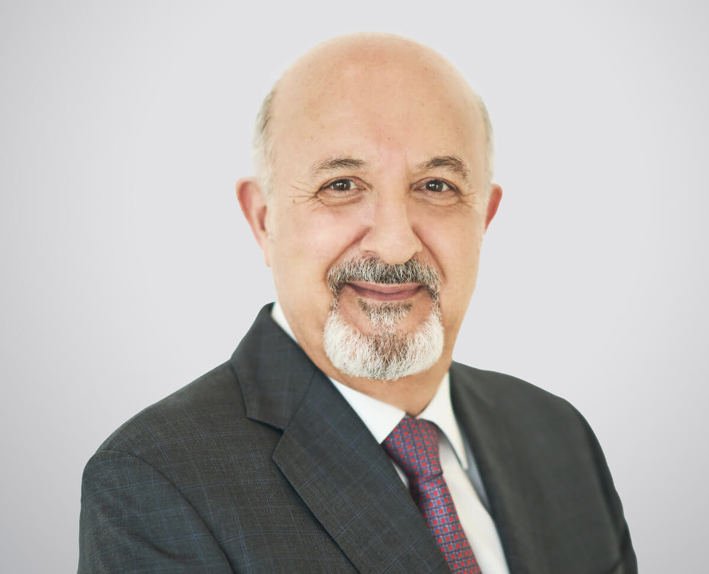
Dr. Ismail Abbara
Consultant Urologist & Andrologist · Decades of Experience
Kings College Hospital Dubai – Dr. Samer Obeidat
Dr. Samer Obeidat is a UK-trained Consultant Urological Surgeon whose practice includes andrology, male fertility, and erectile dysfunction alongside advanced minimally invasive urological surgery. He completed his specialist training through the Mersey Deanery in Liverpool and previously worked at Royal Liverpool and Broadgreen University Hospitals in the UK.
What makes him particularly relevant for Micro-TESE patients is the combination of fertility-focused urology and experience within a hospital system that openly integrates male infertility services into its urology department.
His background in robotic, laparoscopic, and endoscopic surgery also suggests familiarity with precision-based surgical environments where coordination between surgeons and laboratory teams is essential.
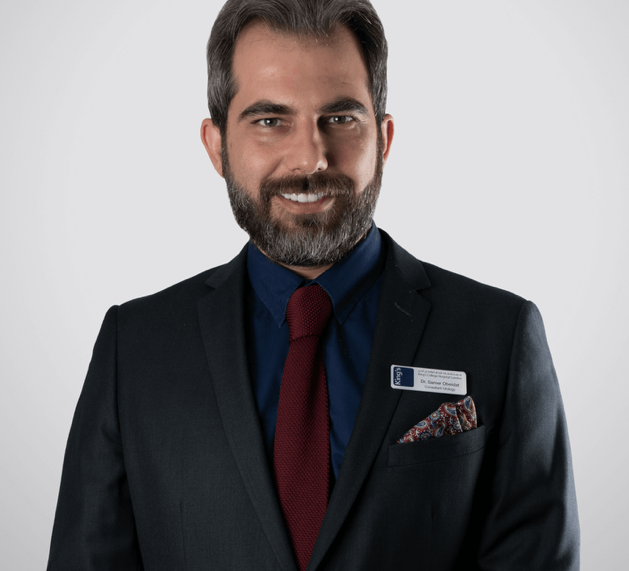
Dr. Samer Obeidat
UK-Trained Consultant Urological Surgeon · Fertility & Andrology Specialist
Kings College Hospital Dubai – Dr. Shahzad Shah
Dr. Shahzad Shah is a UK-trained Consultant Urologist with close to two decades of clinical experience and fellowships from both the Royal College of Surgeons of Edinburgh and the European Board of Urology. In addition to his surgical work, he previously served as departmental lead for governance and risk at West Herts Teaching Hospitals NHS Trust in the UK.
That governance background matters more than it may initially seem. Micro-TESE success is not only about surgical skill; it also depends on clinical systems, protocol consistency, and multidisciplinary coordination.
A physician involved in quality oversight and risk management may bring stronger attention to structured patient pathways and procedural standards. His affiliation with a hospital that specifically includes male infertility and andrology within its urology services further strengthens why his profile may be worth reviewing.
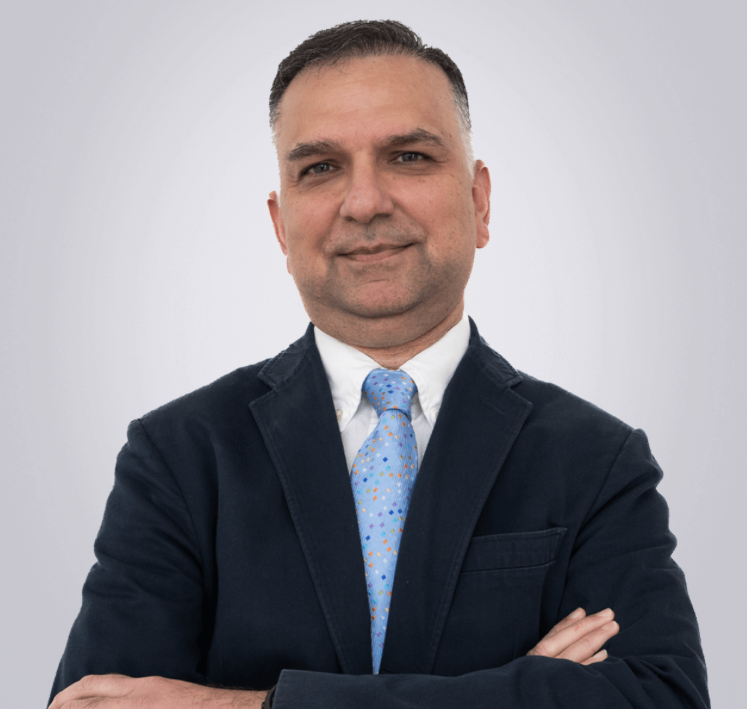
Dr. Shahzad Shah
UK-Trained Consultant Urologist · Clinical Quality & Governance Expert
Kings College Hospital Dubai – Dr. Martin Peter Moody
Dr. Martin Peter Moody brings a long NHS background to his work in Dubai, having spent 17 years as a Consultant Urological Surgeon at Royal Devon University Healthcare NHS Foundation Trust. During that time, he also held leadership responsibilities as both cancer lead and department lead.
For fertility patients, his profile may be worth exploring because it reflects experience within large multidisciplinary healthcare systems where surgical quality control, governance, and collaborative care are heavily emphasized.
He is also part of the urology team at King’s College Hospital Dubai, whose department includes male infertility and andrology services. His additional experience serving as Defence Consultant Adviser for Urology within the UK Military Reserves further suggests involvement in complex and high-accountability surgical practice environments.

Dr. Martin Peter Moody
UK NHS Consultant Urological Surgeon · 17+ Years Healthcare Leadership
IMH Dubai – Dr. Ali Mohammed Mohamednour
Dr. Ali Mohammed Mohamednour is a specialist urologist with experience across endoscopic, minimally invasive, and open urological surgery. He holds a Clinical MD in Urology from the Sudan Medical Specialization Board and is licensed by both the Dubai Health Authority and the UAE Ministry of Health.
What makes his profile relevant in the context of male infertility is that his clinic explicitly includes male fertility assessment within its urology services. While his profile is not centered exclusively on reproductive microsurgery, patients looking for an initial fertility-focused urological evaluation may still find value in assessing whether the clinic offers the multidisciplinary diagnostic pathway recommended for complex azoospermia cases.
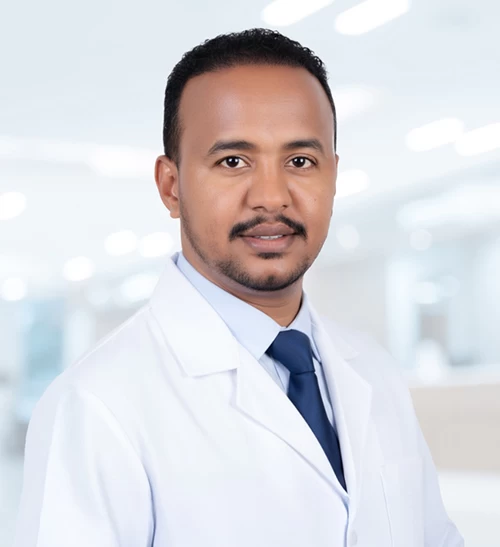
Dr. Ali Mohammed Mohamednour
Specialist Urologist · Minimally Invasive & Fertility Diagnostics
AIC City Polyclinic – Dr. Houshiar Sijani
With more than three decades of clinical experience, Dr. Houshiar Sijani has a long-standing background in urology with declared interests in male infertility, erectile dysfunction, and endourology.
He is affiliated with multiple international and regional urological associations, including the American Urological Association and the European Association of Urology. His profile may be worth considering for patients who want a physician whose practice openly includes fertility-related care rather than focusing solely on general urology.
In addition, the clinic itself highlights fertility enhancement among its men’s health services, which suggests that male reproductive health is treated as a defined clinical area rather than an occasional secondary consultation topic.
Dr. Houshiar Sijani
Specialist Urologist · 30+ Years Experience in Male Reproductive Health
Myth vs. Reality: Navigating Micro-TESE and Male Infertility
| Myth | Reality |
| A zero sperm count on a standard semen test means biological fatherhood is completely impossible. | Azoospermia only means there is no sperm in the ejaculate. Micro-TESE can often find and harvest viable sperm hiding directly within the testicular tissue. |
| Any well-known IVF clinic can perform a successful Micro-TESE procedure. | Micro-TESE requires highly specialized reproductive microsurgery. It demands a dedicated andrologist and an advanced andrology lab; basic IVF centers are rarely equipped to handle rare, fragile surgical samples. |
| Micro-TESE is just a fancier name for a standard testicular biopsy. | A standard biopsy takes random tissue samples blindly. Micro-TESE uses a high-powered surgical microscope to meticulously search for and target specific, healthy-looking tubules, maximizing retrieval while preserving tissue. |
| The success of the procedure rests entirely on the individual skill of the surgeon. | While a skilled urologist is vital, it is a synchronized team effort. Immediate, real-time coordination with embryologists and a robust laboratory quality system (QMS) are just as critical to ensure the retrieved sperm survives. |
| High overall clinic success rates automatically mean excellent male fertility outcomes. | Many clinics place their primary focus on female fertility treatments, treating the male partner as a secondary concern. A high-quality center must track and share specific KPIs for male factor cases and non-obstructive azoospermia. |
Summary
Deciding to pursue Micro-TESE is not a small decision. It involves surgery, precise lab work, emotional investment, and significant trust in the team treating you.
The good news is that Dubai has a growing number of experienced urologists with backgrounds in andrology and male fertility who are worth exploring.
What research consistently shows is that success in male fertility surgery goes beyond finding a skilled surgeon. It requires a whole system: proper diagnosis, lab readiness, team coordination, quality protocols, and genuine patient support.
If you are planning your Micro-TESE journey from outside the UAE, navigating that system alone can be overwhelming. This is where medical tourism support can genuinely add value.
Nova Voya works with patients looking for trusted clinical care in Dubai, helping match them to the right specialists based on their actual diagnosis rather than just a clinic’s marketing language. Whether you are at the research stage or ready to book, having the right support around you makes the process far less stressful and far more focused on what matters: finding your path to parenthood.
Not Sure Which Micro-TESE Clinic in Dubai Is Right for You? 🏥
Nova Voya helps international patients navigate medical care in Dubai, including connecting you with the right specialists for complex procedures like Micro-TESE. We match patients to clinics that are genuinely equipped for male fertility surgery, not just ones that list it on a website.
- ✔ Clinic matching based on your specific diagnosis and needs
- ✔ Support coordinating appointments with urologists and fertility teams
- ✔ Guidance on what to prepare and what questions to ask before your consultation
*Medical tourism guidance, not clinical advice