

What most families are never told is that spinal surgery and spinal recovery are two completely separate journeys. Surgery addresses the structure. What happens next, whether someone regains movement, independence, and quality of life, depends almost entirely on what comes after the operating room.
By the time you finish reading this article, you will understand exactly why the weeks and months following surgery are the most critical window in the entire recovery process, what types of rehabilitation have actually been studied and tested in clinical research, which factors determine who recovers more and who recovers less, and what to look for when choosing a rehabilitation program for your loved one.
This is not general advice. Every claim in this article comes directly from clinical research on spinal cord injury rehabilitation, so you can make decisions based on evidence, not guesswork.
- Key Takeaways: (TL;DR)
- The Surgeon Said the Operation Was Successful. So Why Can't They Move Yet?
- What Does Rehabilitation After SCI Actually Look Like? What Works?
- Does Starting Rehabilitation Earlier Actually Make a Difference?
- Who Is More Likely to Recover?
- What Should You Look for in a Rehabilitation Setting?
- A hospital-based setting with advanced rehabilitation infrastructure
- A multidisciplinary team working together on your case
- Intensive daily therapy, 5 to 6 hours per day, six days a week
- A structured 4-week program with clear goals
- Bladder and bowel management as part of the program, not an afterthought.
- Upper limb and daily activity rehabilitation alongside mobility training.
- A dedicated case manager from day one
- Spinal Cord Injury Rehabilitation Package
- Myths vs. Reality: What Research Actually Says About SCI Rehabilitation
- Summary
- FAQs
Key Takeaways: (TL;DR)
- Surgery stabilizes the spine. Rehabilitation rebuilds the function. Both are necessary, and they serve different goals.
- The acute and subacute phases (roughly the first 12-18 months post-injury) represent the primary window for neurological recovery. This time should not be wasted.
- Observational evidence consistently links delayed rehabilitation to worse daily living outcomes and lower quality of life, even though no direct comparative trial exists.
- BWSTT and conventional gait training produce broadly similar functional outcomes. BWSTT may improve specific gait mechanics but requires significant staffing.
- FES, when combined with occupational therapy, shows meaningful improvements in upper limb and self-care function for patients with incomplete cervical SCI.
- Injury severity at admission is the strongest predictor of recovery. Complete injuries, lower AIS grades, and lower FIM motor scores at admission are all linked to greater challenges.
- Social and financial factors (insurance type, education level) independently influence rehabilitation outcomes, beyond injury severity alone.
- The overall evidence base for SCI rehabilitation remains limited. Most findings carry low-strength evidence by GRADE standards, highlighting the need for more and better research.
Spinal Cord Injury Rehabilitation Package
The Surgeon Said the Operation Was Successful. So Why Can’t They Move Yet?
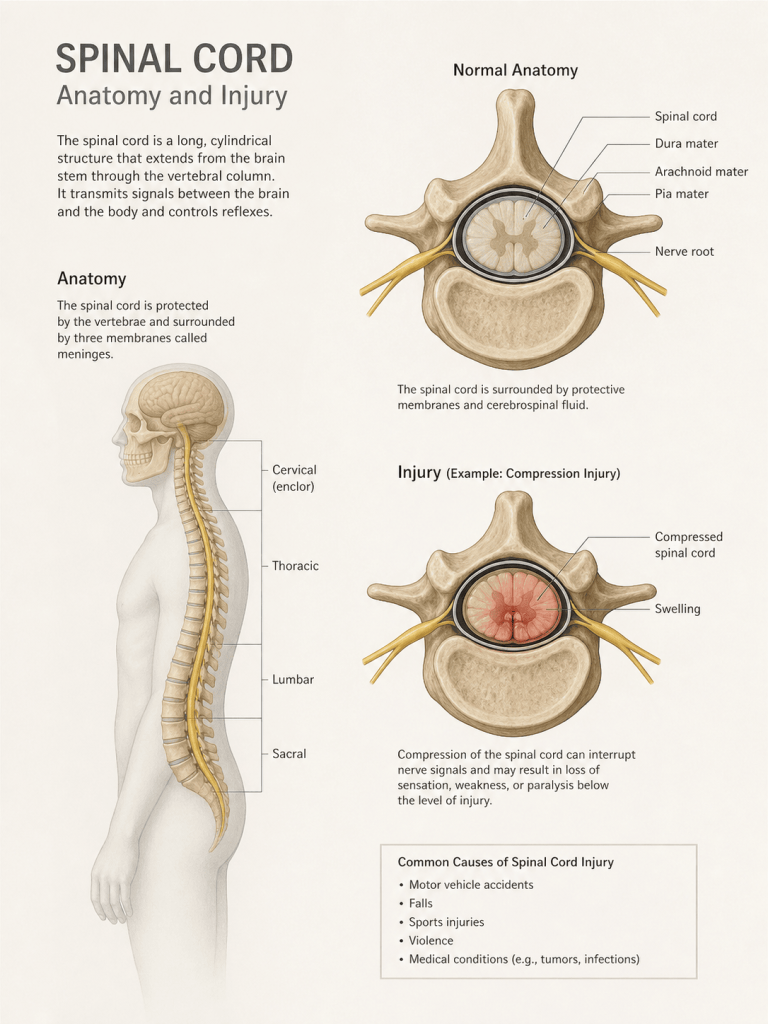
Here is what the research tells us: surgery addresses the structural problem, but it does not rebuild the connection between the brain and the body. That is a separate process, and it requires a completely different kind of work.
According to Burns et al. (2017), rehabilitation after spinal cord injury (SCI) serves several critical functions beyond just physical exercise. During the acute and subacute phases of recovery, the goals are:
- Preventing secondary complications from immobility
- Promoting and enhancing neurological recovery
- Maximizing functional ability in daily life
- Establishing the right conditions for long-term health
There is an important distinction the research highlights: the acute and subacute phases combined roughly correspond to the natural window of neurological recovery, which lasts approximately 12 to 18 months after injury. After that window, the nervous system’s ability to reorganize and adapt tends to plateau.
This is why what happens in the months after surgery matters so much.
What Does Rehabilitation After SCI Actually Look Like? What Works?
The review evaluated five randomized controlled trials (RCTs) that compared different rehabilitation strategies head-to-head. Here is what the evidence shows for each approach:
Body Weight-Supported Treadmill Training (BWSTT) vs. Conventional Gait Training
BWSTT involves walking on a treadmill while part of the patient’s body weight is supported by a harness overhead. The idea is that it allows patients who cannot yet support themselves to practice the mechanics of walking.
Two RCTs were reviewed. The first, a large multicenter trial, found no statistically significant difference between BWSTT and standard overground gait training in walking speed, walking distance, or functional independence scores at any follow-up point, whether at 3, 6, or 12 months.
A second, smaller RCT found that BWSTT did outperform conventional training on several specific gait mechanics, including hip extension during walking and step length, both of which are relevant to how naturally a person walks.
The overall takeaway: BWSTT is not clearly superior to conventional walking training in terms of broad functional outcomes, but it may offer specific advantages for gait quality. It is also resource-intensive, typically requiring two to three trained therapists to assist one patient through a session.
Functional Electrical Stimulation (FES) for Upper Limb Recovery
FES involves applying small electrical currents to muscles or nerves to stimulate controlled movement; for example, to help a patient with a cervical injury open and close their hand.
One RCT compared FES combined with conventional occupational therapy to conventional therapy alone, in patients with incomplete cervical SCI. The FES group showed meaningfully greater improvements in:
- Overall motor function (FIM Motor subscore)
- Self-care abilities like feeding and dressing (FIM Self-Care and SCIM Self-Care subscores)
- Specific hand function tasks, including holding a cylinder and a credit card
The researchers note that hand function is one of the highest priorities for individuals with cervical spinal cord injuries, and that the potential benefit of FES in this area likely outweighs its costs in most settings.
Unsupported Sitting Training vs. Standard Inpatient Therapy
One RCT tested whether adding extra sessions of unsupported sitting exercises (beyond standard therapy) improved patients’ ability to sit without support. The result: no significant additional benefit was found. The extra sitting training did not produce improvements beyond what standard inpatient rehabilitation already achieved.
Does Starting Rehabilitation Earlier Actually Make a Difference?
The short answer is: probably yes, but the direct evidence is thinner than you might expect.
Burns et al. (2017) searched through 384 published studies looking specifically for trials that compared early versus delayed rehabilitation start times. They found zero trials that directly studied this question in a controlled way.
However, several observational and retrospective studies included in the review did find a consistent pattern: patients who waited longer before starting structured rehabilitation tended to perform worse in daily activities and reported lower quality of life at follow-up. The association between delayed start and worse outcomes appeared in multiple independent datasets.
The researchers also note that delaying rehabilitation is increasingly considered ethically problematic, meaning it would be difficult today to conduct a trial that intentionally withholds early rehab from any patient. That, in itself, tells you something about the clinical consensus.
Who Is More Likely to Recover?
One of the most important contributions of this systematic review is its analysis of what patient and injury factors actually predict recovery outcomes. Ten studies involving thousands of patients were reviewed.
Injury-Related Factors That Affect Recovery
The most consistently important predictors were injury-related:
Complete vs. incomplete SCI
Injury completeness: Patients with complete spinal cord injuries (meaning no motor or sensory function is preserved below the injury) consistently showed poorer neurological and walking outcomes and higher mortality rates compared to those with incomplete injuries.
Lower FIM Motor Score on admission
Functional status at admission: A lower motor function score at rehabilitation admission was consistently linked to worse performance in daily activities and a higher risk of pressure ulcers.
Lower AIS grade (more severe injury)
Injury severity (AIS Grade): Lower AIS grades were associated with worse daily activity performance and ambulation outcomes across multiple studies.
Longer delay before starting rehab
Time from injury to rehabilitation: Multiple studies linked longer delays to worse daily activity performance and lower quality of life, though not consistently to rehospitalization or pressure ulcer rates.
Stronger SSEP recordings
Neurophysiological testing: Stronger somatosensory-evoked potential recordings (a type of nerve signal test) were predictive of better walking outcomes.
Patient-Related Factors
Several non-injury factors also showed consistent associations:
- Higher educational background was linked to better quality of life after rehabilitation.
- Medicaid enrollment (in US-based studies) was consistently associated with worse daily activity performance, lower quality of life, and higher rehospitalization rates, pointing to the role of social and financial factors in recovery.
- Patients receiving Workers’ Compensation also showed some negative outcome associations.
- Higher body mass index (BMI above 30) was somewhat unexpectedly associated with better quality of life outcomes in several large datasets.
These findings matter practically: they suggest that rehabilitation teams should not just focus on the injury itself, but also on the social, financial, and psychological context around each patient.

Ms. Samira Cutts
Occupational Therapist & Neuromodulation Practitioner · 24 Years Experience
What Should You Look for in a Rehabilitation Setting?
Based on what the research identifies as important, a strong rehabilitation program after traumatic spinal cord injury should provide more than a single physiotherapy modality.
Burns et al. (2017) note that contemporary interdisciplinary rehabilitation typically involves multiple concurrent treatments delivered by multiple team members and that this complexity is precisely what makes it difficult to study, but also what makes it effective.
When evaluating a rehabilitation setting, key elements to consider include:
- A multidisciplinary team including physiotherapists, occupational therapists, rehabilitation physicians, and nursing staff
- Access to technology such as FES for upper limb rehabilitation (particularly relevant for cervical SCI)
- High-repetition, task-specific training protocols aligned with the goals of neuroplasticity
- Programs that address bladder, bowel, and skin management as part of the rehabilitation plan
- Psychological and social support alongside physical rehabilitation
- Structured tracking of functional outcomes using validated tools like the FIM or SCIM
Here is what that looks like in practice:
A hospital-based setting with advanced rehabilitation infrastructure
Not a wellness center or a general physiotherapy clinic. A dedicated neurorehabilitation facility with the equipment, clinical protocols, and specialist staff that SCI recovery specifically requires.
A multidisciplinary team working together on your case
This means rehabilitation physicians, neuro-physiotherapists, occupational therapists, and support for bladder, bowel, and neuropsychological needs; all coordinating with each other, not working in isolation.
Intensive daily therapy, 5 to 6 hours per day, six days a week
This is the level the research points to when discussing meaningful neurological engagement. One or two sessions a week will not move the needle inside the recovery window. Consistency and volume matter.
A structured 4-week program with clear goals
Not open-ended. Not vague. A defined timeframe with a rehabilitation plan built around your injury level, your current function, and where you need to get to.
Bladder and bowel management as part of the program, not an afterthought.
This is one of the most significant quality-of-life concerns after SCI, and any serious program should address it directly and practically.
Upper limb and daily activity rehabilitation alongside mobility training.
Walking is not the only goal. Hand function, transfer skills, wheelchair mobility, dressing, feeding; independence in daily life is the real measure of a successful rehabilitation program.
A dedicated case manager from day one
Someone whose job is to coordinate your assessments, your schedule, your logistics, and your communication with the clinical team, so that the family can focus entirely on supporting the patient.
If a program you are evaluating does not offer most of what is on this list, it is worth asking why, and whether a more specialized setting might be a better fit for the stage of recovery your loved one is in.
Spinal Cord Injury Rehabilitation Package
Myths vs. Reality: What Research Actually Says About SCI Rehabilitation
| Common Myth | The Research Reality |
| Once surgery is successful, the hard part is over | Surgery stabilizes the spine but does not restore function. Neurological recovery requires a separate, structured rehabilitation process that begins after surgery |
| It does not matter much when rehabilitation starts, as long as it starts eventually | Multiple observational studies link delayed rehabilitation to worse performance in daily activities and lower quality of life. The timing of rehabilitation start is not clinically neutral |
| Body weight-supported treadmill training is more advanced and therefore more effective than conventional walking therapy | Clinical trials found no significant difference between the two approaches in walking speed, walking distance, or functional independence scores at 3, 6, or 12 months |
| A few physiotherapy sessions per week at home are enough after a serious spinal injury | The research describes rehabilitation as a complex, multi-component process requiring intensive daily engagement. Isolated sessions are unlikely to replicate the therapeutic dose needed during the neurological recovery window |
| Functional Electrical Stimulation is only a high-tech add-on with marginal benefit | For patients with incomplete cervical SCI, FES combined with occupational therapy produced significantly greater improvements in motor function and self-care scores compared to therapy alone |
| Physical recovery is the only thing that determines rehabilitation outcomes | Research consistently shows that social and financial factors, including insurance type, education level, and income, independently predict quality of life and rehospitalization rates after SCI |
| If a patient has a complete spinal cord injury, rehabilitation cannot meaningfully help | While complete injuries are associated with more limited neurological and ambulation recovery, rehabilitation remains essential for preventing secondary complications, maximizing functional independence, and improving quality of life |
| The evidence for SCI rehabilitation is well-established and definitive | The systematic review rated most findings as low-strength evidence by GRADE standards, reflecting the significant gaps that still exist in the research base for SCI rehabilitation |
Summary
Spinal cord injury is one of the most life-changing events a person and their family can face. Surgery is the beginning, not the end. What happens in the weeks and months that follow determines how much function can be recovered and how much independence a person can rebuild.
The research is clear on one thing: early, structured, multidisciplinary rehabilitation matters. It cannot guarantee a full recovery, because injury severity plays a fundamental role. But it can meaningfully reduce complications, improve daily living skills, and raise quality of life compared to delayed or inconsistent care.
For families navigating these decisions, the most important step is finding a rehabilitation program that treats the whole person, not just the injury. That means a hospital-based setting, a coordinated multidisciplinary team, intensive daily therapy, and a dedicated case manager who handles the logistics so the family can focus on what matters most.
At Nova Voya, we help families find rehabilitation programs that meet exactly these research-backed standards, including intensive, evidence-based SCI rehabilitation centers with multidisciplinary teams, dedicated case managers, and structured 4-week programs designed precisely for the recovery window the research has identified as critical.
If you are trying to understand your options, figure out what level of care your loved one needs, or simply find out what is available and realistic for your situation, we are here to help you navigate that, without pressure, and without guesswork.
Do Not Let the Recovery Window Close Without the Right Program 🧠
- ✔ Structured 4-week intensive SCI rehabilitation: 5 to 6 hours of therapy per day
- ✔ Multidisciplinary team covering mobility, hand function, bladder care, and daily independence
- ✔ Dedicated Case Manager assigned within 12 hours: we handle the logistics, you focus on recovery
*Hospital-Based. Evidence-Guided. Built for Real Recovery.
Are you still in the acute phase after surgery, or are you already looking for the next step in rehabilitation?
FAQs
As soon as the patient is medically stable, the research consistently links delays to worse outcomes in daily function and quality of life.
Not clearly, current evidence shows no significant difference in overall walking outcomes, though BWSTT may improve specific gait mechanics.
Functional Electrical Stimulation (FES) uses electrical impulses to activate muscles, research shows it improves upper limb and self-care function in incomplete cervical SCI when added to occupational therapy.
It is the strongest predictor, complete injuries and lower AIS grades are consistently linked to more limited functional recovery.
The acute and subacute phases together correspond to approximately 12-18 months post-injury, which is when the nervous system has the greatest potential to reorganize and recover.
Yes, research shows that Medicaid enrollment, Workers’ Compensation status, and education level all independently predict outcomes like quality of life and rehospitalization rates.
Most findings are rated as low-strength by the GRADE system, meaning more high-quality trials are still needed across most areas of SCI rehabilitation.
Scientific Source: This article is based on peer-reviewed research by A.S. Burns, R.J. Marino, S. Kalsi-Ryan, J.W. Middleton, L.A. Tetreault, J.R. Dettori, K.E. Mihalovich, and M.G. Fehlings, “Type and Timing of Rehabilitation Following Acute and Subacute Spinal Cord Injury: A Systematic Review,” published in Global Spine Journal, 2017, Vol. 7(3S), pp. 175S–194S. DOI: https://doi.org/10.1177/2192568217703084