If you or a loved one has been diagnosed with Parkinson’s disease, you may already be taking medication. But medication alone is often not enough. Parkinson’s disease is one of the most common neurodegenerative disorders in the world, and while drugs can help manage symptoms, they cannot fully stop motor decline or fully restore physical function.
A landmark clinical study by Frazzitta et al. (2015), published in Neurorehabilitation and Neural Repair, showed that Parkinson’s rehabilitation through a structured, intensive program can do something medication alone cannot: slow the progression of motor decay and improve physical performance over a 2-year period.
This article explains what the science says, when to start, what a good program looks like, and why a 4-week specialized program at an expert center abroad may be the most effective choice for Parkinson’s patients today.
- Key Takeaways: (TL;DR)
- Medication vs. Rehabilitation: What Is the Actual Difference?
- When Should Parkinson's Rehabilitation Begin?
- What Is Inside a Specialized Parkinson's Rehabilitation Program?
- 4-Week Intensive Program vs. Scattered Sessions: Which Works Better?
- Parkinson's Rehabilitation in Specialized Centers Abroad: Advantages and Considerations
- What Results Can Patients Realistically Expect?
- How to Prepare for a Parkinson's Rehabilitation Medical Trip
- Myths vs Reality: Parkinson's rehabilitation abroad
- Summary
- FAQs
Key Takeaways: (TL;DR)
- A 4-week intensive rehabilitation program (MIRT) for Parkinson’s patients significantly improves motor function, walking ability, and daily independence based on a 2-year randomized controlled study.
- Patients who completed two 4-week MIRT programs showed measurable improvement in motor scores after 2 years, while patients on medication only showed no change.
- Intensive rehabilitation can delay the need to increase Parkinson’s medication, including levodopa.
- The program works best in early stages of Parkinson’s disease and involves a full multidisciplinary team: neurologists, physiotherapists, occupational therapists, psychologists, and nurses.
- Starting rehabilitation early breaks a dangerous cycle of reduced movement and faster disease progression.
- Choosing a specialized center abroad gives patients access to structured, evidence-based programs that are difficult to replicate with scattered weekly sessions.

Medication vs. Rehabilitation: What Is the Actual Difference?
Medication and rehabilitation work through completely different mechanisms, and science shows that both are needed, especially in the early stages of Parkinson’s disease.
Parkinson’s medications (such as levodopa, dopamine agonists, and MAO-B inhibitors like rasagiline) work by managing brain chemistry. They reduce tremors and stiffness. However, they do not directly improve balance, walking rhythm, or independence in daily tasks.
What Medication Can and Cannot Do
Medication helps manage symptoms, but it cannot:
- Retrain the brain’s movement pathways
- Improve balance and posture through exercise
- Build aerobic fitness
- Teach the body to walk more safely with cues
- Help patients perform daily tasks more independently
What Rehabilitation Adds
The Frazzitta study compared two groups of newly diagnosed Parkinson’s patients. Both groups received the same drug (rasagiline). Only one group also completed two 4-week intensive rehabilitation programs.
After 2 years:
- The rehabilitation group showed significant improvement in all motor performance scores
- The medication-only group showed no significant change in any outcome
- The rehabilitation group needed much lower doses of levodopa-equivalent drugs
This tells us clearly: rehabilitation adds real, measurable value that medication alone cannot deliver.
When Should Parkinson’s Rehabilitation Begin?
Parkinson’s rehabilitation should begin as early as possible, ideally right after diagnosis, when the brain is most responsive to physical training and neuroplasticity.
Early to Mid Stages of the Disease
The Frazzitta study focused specifically on patients in the early stages of Parkinson’s disease. These are patients who can walk without physical assistance and show mild but noticeable symptoms.
The results were clear: even in early stages, intensive rehabilitation:
- Improved motor scores (UPDRS II and UPDRS III) within 6 months
- Improved walking tests (Timed Up-and-Go, 6-Minute Walking Test)
- Improved self-reported disability scores
- And maintained those improvements over the full 2-year follow-up period
Symptoms That Indicate the Need for a Specialized Program
Consider a specialized intensive rehabilitation program if a Parkinson’s patient experiences:
- Slowing down of walking pace or shortened stride length
- Difficulty starting to walk or stopping (freezing)
- Balance problems or increased risk of falls
- Reduced ability to perform daily tasks like dressing or using tools
- Stiffness and reduced range of movement in the spine, hips, or shoulders
- A general sense of reduced physical activity and energy
The Common Mistake: Delaying Rehabilitation
Many patients and families wait too long before starting rehabilitation. They often assume medication is enough, or they believe rehabilitation is only for people who are in a more advanced stage of the disease.
The Frazzitta study directly challenges this assumption. The researchers observed that even mild symptoms cause patients to reduce their physical activity, which then leads to faster worsening of motor performance. This is a vicious cycle: less movement leads to more weakness, which leads to less movement.
The solution, as stated in the study, is early intervention: an intensive rehabilitation program at the initial stage can act as a “motor shock” that breaks this cycle, restoring motor performance close to the patient’s pre-disease level.
Waiting is one of the most costly decisions a Parkinson’s patient can make.
What Is Inside a Specialized Parkinson’s Rehabilitation Program?
A high-quality, evidence-based Parkinson’s rehabilitation program (known as MIRT, or Multidisciplinary Intensive Rehabilitation Treatment) includes multiple types of therapy delivered by a coordinated expert team, every single day.
Here is what the Frazzitta study’s MIRT program included, in detail:
Neuro-Physiotherapy
The first daily session focused on the body’s physical foundations:
- Cardiovascular warm-up activities
- Relaxation exercises
- Muscle stretching (targeting the scapular, hip flexor, hamstring, and gastrocnemius muscles)
- Range-of-motion exercises for the spinal, pelvic, and scapular joints
- Postural changes in the supine position
These exercises address the stiffness and postural problems that Parkinson’s disease causes at the neurological level.
Balance and Posture Exercises
The second daily session targeted walking and balance using technology and movement cues:
- Stabilometric platform training: Patients followed a visual cursor on a screen that represented their own foot movements. This trains proprioception and balance in a direct, measurable way.
- Treadmill training with visual and auditory cues: Patients walked toward a visual target on a screen, accompanied by musical beats synchronized at a rhythm of 0.5 cycles per second. This helps retrain walking rhythm in the brain.
- All treadmill exercises were aerobic, with heart rate kept at 60-70% of heart rate reserve, and speed gradually increased every 3 days.
- Patients completed 30 minutes of treadmill training per day for 4 weeks (20 total sessions).
Occupational Therapy for Daily Living Skills
The third daily session was focused on independence:
- Moving from sitting to standing
- Rolling from supine to sitting and back
- Dressing independently
- Using everyday tools
- Exercises to improve hand function and fine motor skills (such as using screws and bolts)
This session directly targets the patient’s ability to live independently, which is one of the most important quality-of-life factors in Parkinson’s disease.
Freezing of Gait Management
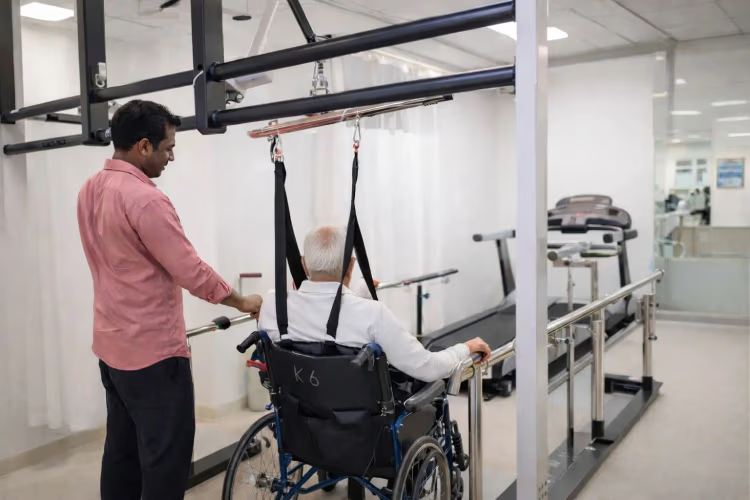
The use of auditory and visual cues during treadmill training in the Frazzitta program was specifically designed to address gait rhythm problems, which include freezing of gait. The musical beats and visual targets give the brain an external rhythm to follow when its own internal rhythm is disrupted by Parkinson’s disease.
The Multidisciplinary Team
A key feature of this type of program is that it does not rely on one type of therapist alone. The Frazzitta MIRT team included:
- Neurologists
- Physiatrists (rehabilitation medicine doctors)
- Psychologists
- Nurses
- Physiotherapists
- Occupational therapists
Every discipline played a role. This team approach ensures that all aspects of the patient’s condition are addressed together, not in isolation.
4-Week Intensive Program vs. Scattered Sessions: Which Works Better?
A 4-week intensive program delivers results that weekly scattered sessions simply cannot replicate, because the brain learns through daily repetition and consistent high-intensity practice.
The Advantage of Daily Repetition
The Frazzitta program ran 3 hours of therapy per day, 5 days per week, for 4 weeks. This means patients received more than 55 hours of structured rehabilitation in a single admission.
After just the first 4-week block, all outcome measurements improved significantly (all P values < .0001). These results were maintained and extended with a second 4-week program one year later.
Why the Nervous System Responds to Intensity
The study noted that physical exercise enhances brain neuroplasticity. The brain’s ability to reorganize its movement circuits is dose-dependent: more high-quality practice leads to greater neurological adaptation.
With scattered weekly sessions, there is not enough consistent stimulus for the nervous system to form new, stable movement patterns. Intensive daily practice provides the repetition the brain needs to rewire itself.
The Impact on Disease Progression
Patients in the MIRT group showed improvement across all key measurements at the 2-year follow-up compared to their starting point:
| Measurement | MIRT Group (2 years) | Control Group (2 years) |
| UPDRS II (daily activities) | Significantly improved | No significant change |
| UPDRS III (motor function) | Significantly improved | No significant change |
| Timed Up-and-Go test | Significantly improved | No significant change |
| PD Disability Scale | Significantly improved | No significant change |
| Patients needing increased drug doses | Minority | Majority |
In the medication-only group, 80% of patients needed to increase their drug dosage by the 12-month mark. In the rehabilitation group, 100% were still on the same low-dose monotherapy at 12 months, and 75% remained on it at 2 years.
Parkinson’s Rehabilitation in Specialized Centers Abroad: Advantages and Considerations
Traveling abroad for a 4-week Parkinson’s rehabilitation program gives patients access to specialized multidisciplinary centers, structured evidence-based protocols, and expert teams that may not be available or affordable locally.
Access to Advanced Specialties
Not every country or city has a center that offers the full MIRT model: neurologists, physiatrists, physiotherapists, occupational therapists, and psychologists working together, daily, over 4 weeks.
Specialized centers abroad that follow evidence-based protocols offer exactly this kind of comprehensive setup in a structured, fully managed environment.
Comparative Costs
The cost of a 4-week inpatient rehabilitation program at a specialized center abroad can be significantly lower than comparable programs in Western Europe or North America, while maintaining the same standard of multidisciplinary care and evidence-based methodology.
Support for International Patients
Reputable centers that serve international Parkinson’s patients provide:
- Pre-arrival assessment of the patient’s current Hoehn-Yahr stage and motor performance
- Adapted program based on the patient’s current abilities
- Coordination of all team members under a single program plan
- Clear communication with the patient’s home neurologist
The Role of a Dedicated Case Manager
International patients traveling for a Parkinson’s rehabilitation program benefit enormously from a dedicated Case Manager. This person:
- Coordinates all appointments and sessions before and during the trip
- Acts as the central communication point between the medical team, the patient, and the family
- Ensures the patient’s documents, assessments, and baseline measurements are ready before arrival
- Provides guidance on practical logistics (accommodation, transport, companion support)
Without this coordination, the experience of traveling abroad for medical rehabilitation can become stressful and fragmented, which is the opposite of what a Parkinson’s patient needs.
What Results Can Patients Realistically Expect?
Based on the clinical evidence from the Frazzitta study, patients who complete a 4-week intensive multidisciplinary rehabilitation program can expect meaningful and measurable improvements across several areas.
Improvement in Walking and Movement Rhythm
After the first 4-week MIRT program in the Frazzitta study, patients showed:
- An average improvement of 85.9 meters in their 6-Minute Walking Test
- A reduction of 2.9 seconds in the Timed Up-and-Go test (which measures how quickly a person can stand up, walk 3 meters, turn, and sit back down)
These are clinically significant improvements in real-world walking ability.
Reduced Risk of Falling
Balance training on the stabilometric platform and treadmill training with visual cues directly targets fall risk. The improvement in TUG scores means patients move more safely, with better balance and reaction time.
Greater Independence in Daily Activities
After the first MIRT, the Parkinson’s Disease Disability Scale (PDDS) score dropped by an average of 13.8 points. This scale measures how much Parkinson’s disease interferes with daily activities. A drop of this size means patients can do significantly more for themselves.
At the 2-year follow-up, 75% of rehabilitation patients showed more than 10% improvement in the PDDS, compared to only 38% in the medication-only group.
Delayed Need for Increased Medication
One of the most significant results of the Frazzitta study was the difference in medication needs. The rehabilitation group was able to stay on much lower drug doses over 2 years. This matters because higher doses of levodopa over time can lead to side effects like wearing-off and involuntary movements (dyskinesias).
Rehabilitation does not eliminate the need for medication. But it can reduce how much medication is needed, and for how long.
Caregiver Education
A good 4-week program also teaches the patient’s companion or family caregiver how to support the patient at home after discharge. In the Frazzitta study, patients were given a set of exercises to continue at home, along with clear instructions to walk at least 30 minutes a day or use a treadmill for 20 minutes a day. They were asked to keep a diary of these activities.
Caregiver involvement ensures that the benefits of the program are maintained between intensive rehabilitation cycles.
How to Prepare for a Parkinson’s Rehabilitation Medical Trip
Required Medical Documents
Before traveling to a specialized rehabilitation center abroad, prepare the following:
- Recent neurology reports confirming Parkinson’s diagnosis and current Hoehn-Yahr stage
- A list of all current medications, including dosages and timing
- Recent results from any motor assessments (such as UPDRS scores, if available)
- Mini-Mental State Examination (MMSE) results, if performed
- Any relevant imaging reports (MRI, CT, etc.)
- A signed letter from your treating neurologist summarizing the patient’s condition
Questions to Ask the Medical Team Before You Arrive
- Does the program follow a structured multidisciplinary protocol similar to MIRT?
- How many therapy hours per day are scheduled?
- Is a neurologist involved throughout the program?
- Does the program include treadmill training with visual and auditory cues?
- Is occupational therapy included for daily living skills?
- What happens after discharge: is there a home exercise plan?
- Will the team communicate with my home neurologist?
Tips for the Patient’s Companion
- The companion plays an important role. Ideally, they should participate in at least some of the occupational therapy sessions so they can support the patient at home.
- Plan for the patient to rest adequately each evening. Three hours of therapy daily is intensive, and sleep is essential for neurological recovery.
- Keep a diary of the patient’s daily activities and any changes you notice. This information is valuable for the medical team and for the patient’s home neurologist.
- Do not expect immediate dramatic results during the first week. The program builds gradually, as shown in the Frazzitta study where speed on the treadmill was increased only every 3 days.
Myths vs Reality: Parkinson’s rehabilitation abroad
| Common Myth | The Reality |
| Medication alone is enough to manage Parkinson’s disease. | A 2-year randomized study showed that patients on medication only had no significant improvement in motor scores, while patients who also completed intensive rehabilitation improved across all measures. (Frazzitta et al., 2015) |
| Rehabilitation is only for advanced-stage Parkinson’s patients. | The strongest evidence for rehabilitation comes from early-stage patients (Hoehn-Yahr 1 to 1.5). Starting early breaks the cycle of reduced movement before it accelerates decline. |
| A few sessions per week is just as effective as an intensive program. | Patients in the MIRT program received more than 55 hours of therapy in 4 weeks. This level of daily intensity is what drives neuroplasticity. Weekly scattered sessions cannot replicate this dose. |
| Rehabilitation only helps with movement, not with medication needs. | Patients who completed the 4-week program were significantly less likely to need increased drug doses. At 2 years, 75% remained on low-dose monotherapy versus only 20% in the medication-only group. |
| If symptoms are mild, it is better to wait before starting rehabilitation. | Mild symptoms already cause patients to reduce physical activity, which worsens motor performance over time. The study authors describe early intervention as a “motor shock” that resets this cycle before it takes hold. |
Summary
The evidence is clear. A 4-week multidisciplinary intensive rehabilitation program for Parkinson’s disease is not a luxury or an alternative to medical treatment. It is a clinically proven, evidence-based intervention that can slow motor decline, reduce disability, and delay the need for increasing medication.
The key is to act early, choose a center with a genuine multidisciplinary team, and commit to the full 4-week structured protocol rather than isolated sessions.
If you are looking for a structured way to access this type of care, Nova Voya’s Parkinson’s Mobility & Independence Package is designed to connect Parkinson’s patients with specialized rehabilitation centers abroad, with full Case Manager support from pre-arrival assessment through to post-discharge follow-up.
You do not have to navigate this alone. The first step is the most important one.
Seeking World-Class Medical Care in Dubai? 🏥
Nova Voya helps international patients seamlessly navigate advanced healthcare in Dubai. We connect you with top-tier medical specialists and accredited hospitals tailored precisely to your unique healthcare needs, ensuring a smooth, safe, and stress-free medical journey.
- ✔ Personalized matching with leading medical experts and premier facilities
- ✔ Full support with medical coordination, second opinions, and logistics
- ✔ Independent, honest guidance focused entirely on your health goals
*Medical tourism guidance, not clinical advice
Have you or a loved one tried a structured Parkinson’s rehabilitation program, or are you still relying on medication alone?
FAQs
A multidisciplinary intensive rehabilitation program (MIRT) that includes neuro-physiotherapy, treadmill training with cues, and occupational therapy has shown the strongest clinical results in peer-reviewed studies.
As early as possible, ideally at Hoehn-Yahr stage 1 to 1.5, when the brain is most responsive and the cycle of reduced movement can still be broken effectively.
A 2-year randomized study found that patients who completed two 4-week intensive rehabilitation programs showed better motor function and needed significantly less medication than patients who only received drug treatment.
The evidence-based MIRT protocol includes 3 one-hour sessions per day (2 in the morning, 1 in the afternoon), 5 days per week, for a total of more than 55 hours of treatment over 4 weeks.
Clinical evidence shows that intensive rehabilitation can delay the need to increase drug dosages. In the Frazzitta study, 75% of rehabilitation patients remained on low-dose monotherapy after 2 years, compared to only 20% in the medication-only group.
For patients in early to mid stages of Parkinson’s disease (Hoehn-Yahr 1 to 1.5) who can walk without physical assistance, traveling to a specialized rehabilitation center abroad is considered safe, provided the patient is accompanied and proper medical coordination is in place.
You will need recent neurology reports, a current medication list, any available motor assessment scores (such as UPDRS), MMSE results, and a summary letter from your treating neurologist.