
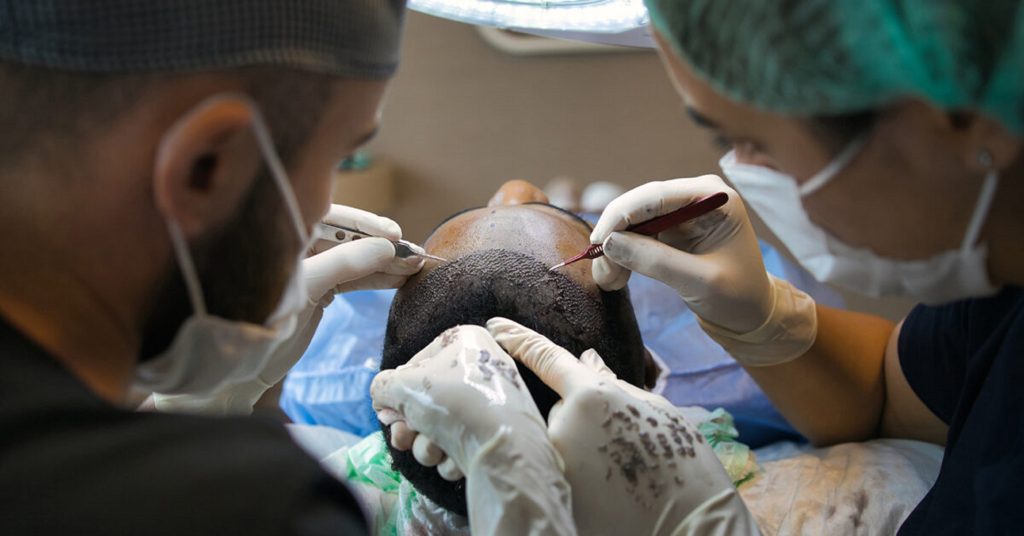
For many patients, the best cosmetic result is the one that looks natural and does not draw attention, neither during recovery nor after the final results emerge. For VIP clients and high-profile individuals considering hair transplant in Dubai, this principle becomes even more critical.
You are not looking to become an artificial version of yourself. You cannot afford extended downtime that interferes with your professional commitments. Most importantly, confidentiality matters, and you need to know that your medical decisions and personal data remain private.
This is one reason many high-profile patients consider Dubai for advanced hair restoration, including FUE, DHI, and non-shaven hair transplant techniques performed in privacy-focused clinical environments. This executive guide explains how technique selection, recovery visibility, regenerative treatments, and confidentiality protocols influence hair restoration decisions in Dubai.
- Key Takeaways (TL; DR)
- For Natural Hair Transplant Results in Dubai, Which Is Better: FUE or DHI?
- FUE (Follicular Unit Extraction)
- Benefits of Sapphire FUE: Maximum Coverage and Faster Healing
- FUE Case Study
- Natural Density FUE Hair Restoration Padra Clinic in Dubai
- Natural Beard Definition with FUE Transplant Padra Clinic in Dubai
- Refined Eyebrow Shaping with NTF Transplant Padra Clinic in Dubai
- DHI (Direct Hair Implantation)
- DHI for Beard and Eyebrow Restoration
- DHI Case Study
- Hair Transplant Method Comparison in Dubai
- Which Method Has Faster Recovery: FUE or DHI?
- FUE or DHI: Which Method is Right for You?
- The Exosome Boost: A Biological Accelerator for Growth and Healing
- What is Exosome Therapy?
- Biological Effects of Exosome Therapy
- Why Some VIP Clients Choose Exosome Therapy
- When is Exosome Therapy Used?
- Innovative Non-Surgical Hair Restoration
- Is Exosome Therapy Painful?
- Impact on Hair Transplant Timeline
- Hair Transplant With vs Without Regenerative Support
- Why Hybrid Regenerative Protocols Matter for Executives
- Privacy Protocols for High-Profile Clients
- Medical Confidentiality Standards in Dubai Clinics
- Non-Shaven Hair Transplant for Public Figures
- Benefits of Non-Shaven Hair Transplant
- Rapid Recovery Protocols for Executives
- Nova Voya’s Role in Confidential Medical Travel Planning
- Seeking World-Class Medical Care in Dubai? 🏥
- Discretion as Part of Modern Hair Restoration in Dubai
- Why Dubai Is a Leading Destination for High Density Hair Restoration
- Summary
- FAQs
Key Takeaways (TL; DR)
- Natural-looking, discreet results are now a leading priority for many hair transplant patients in Dubai.
- Modern hair transplantation focuses on natural density, correct follicle angles, and seamless integration rather than simply increasing graft numbers.
- FUE and DHI serve different purposes, with FUE used for larger coverage and DHI used for precision areas like hairline, beard, and eyebrows.
- Exosome therapy may support healing, reduce inflammation, and contribute to earlier visible recovery in some patients.
- Discretion is important for VIP clients, and some premium clinics offer private access and more confidential scheduling pathways.
- Non-shaven hair transplant techniques allow treatment without obvious visual signs during recovery.
- Hair transplant recovery includes both biological healing and the period when visible signs of surgery fade.
- Dubai’s regulated medical environment and international clinics help patients evaluate safety, quality, and treatment options more confidently.
- For many executives, hair restoration is considered a long-term personal image and career investment rather than just a cosmetic procedure.
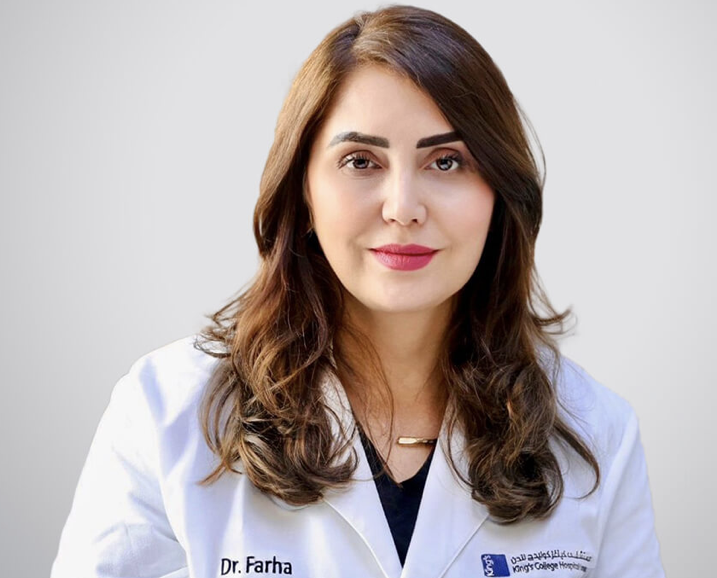
Dr. Farha Khalil
Consultant Dermatologist & Trichologist · 20+ Years Experience
For Natural Hair Transplant Results in Dubai, Which Is Better: FUE or DHI?
FUE and DHI are two advanced hair transplant techniques used in Dubai for natural-looking and discreet results.
FUE is typically recommended for larger treatment areas and higher graft numbers. On the other hand, DHI is ideal for hairline design, beard and eyebrow transplants, and non-shaven procedures where precision and minimal visible recovery are important.
The right method depends on hair loss pattern, donor area, lifestyle, and privacy priorities.
In modern VIP hair transplant procedures, success is exit angle precision, biological density, and natural hair flow dynamics. The ultimate goal is simple: Results so natural that even under harsh lighting or close professional interaction, the procedure remains undetectable.
FUE (Follicular Unit Extraction)
In the FUE technique, individual follicular units are extracted from the donor area and then implanted into micro-channels created in the recipient area.
Because many modern Dubai clinics use microscopic tools and selective donor harvesting techniques, full head shaving is not always necessary. This allows surgical signs to remain less visible among existing hair.
Some patients may return to work or social activities within a few days, depending on the procedure and individual healing response.
Benefits of Sapphire FUE: Maximum Coverage and Faster Healing
For high-density hair restoration in Dubai involving large surface areas such as full scalp restoration, Sapphire FUE is widely used for high graft numbers and dense coverage.
The use of sapphire blades may help:
- Support faster wound healing
- Allow high density graft placement
- Improve follicle direction control
- Reduce tissue trauma
This makes it particularly suitable for executives seeking premium hair restoration with minimal disruption to professional life.
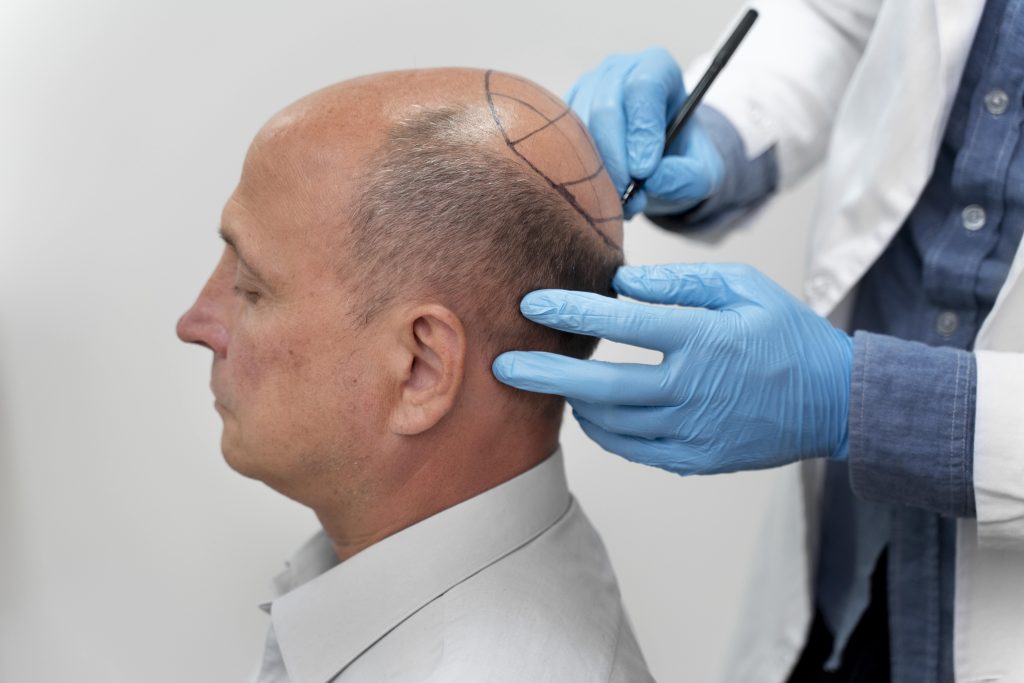
FUE Case Study
- Client: A 45-year-old executive experiencing severe temporal recession and vertex thinning.
- Solution: 3500 grafts transplanted in a single session using Sapphire FUE. The surgeon designed an irregular hairline to avoid an artificial appearance.
- Result after 10 months: Full density restoration with a completely natural integration into existing hair patterns.
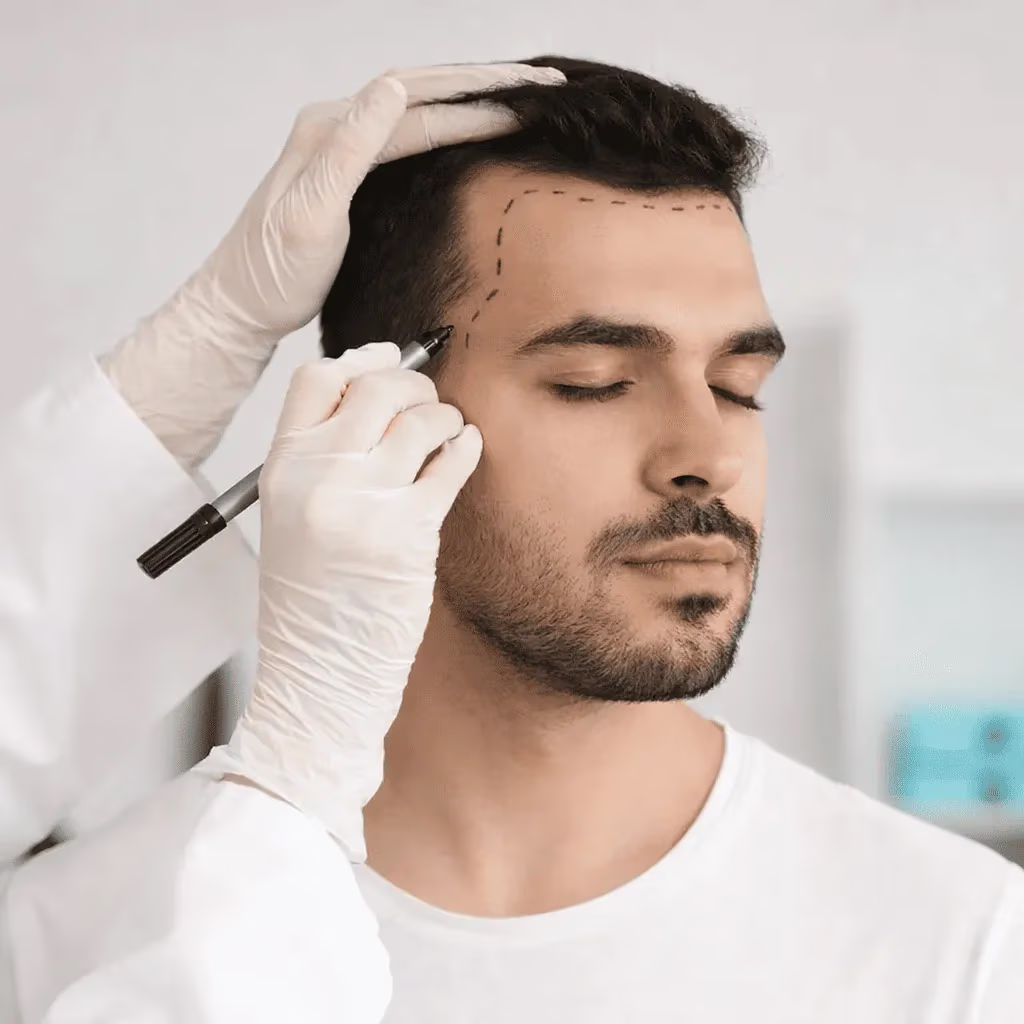
Natural Density FUE Hair Restoration Padra Clinic in Dubai
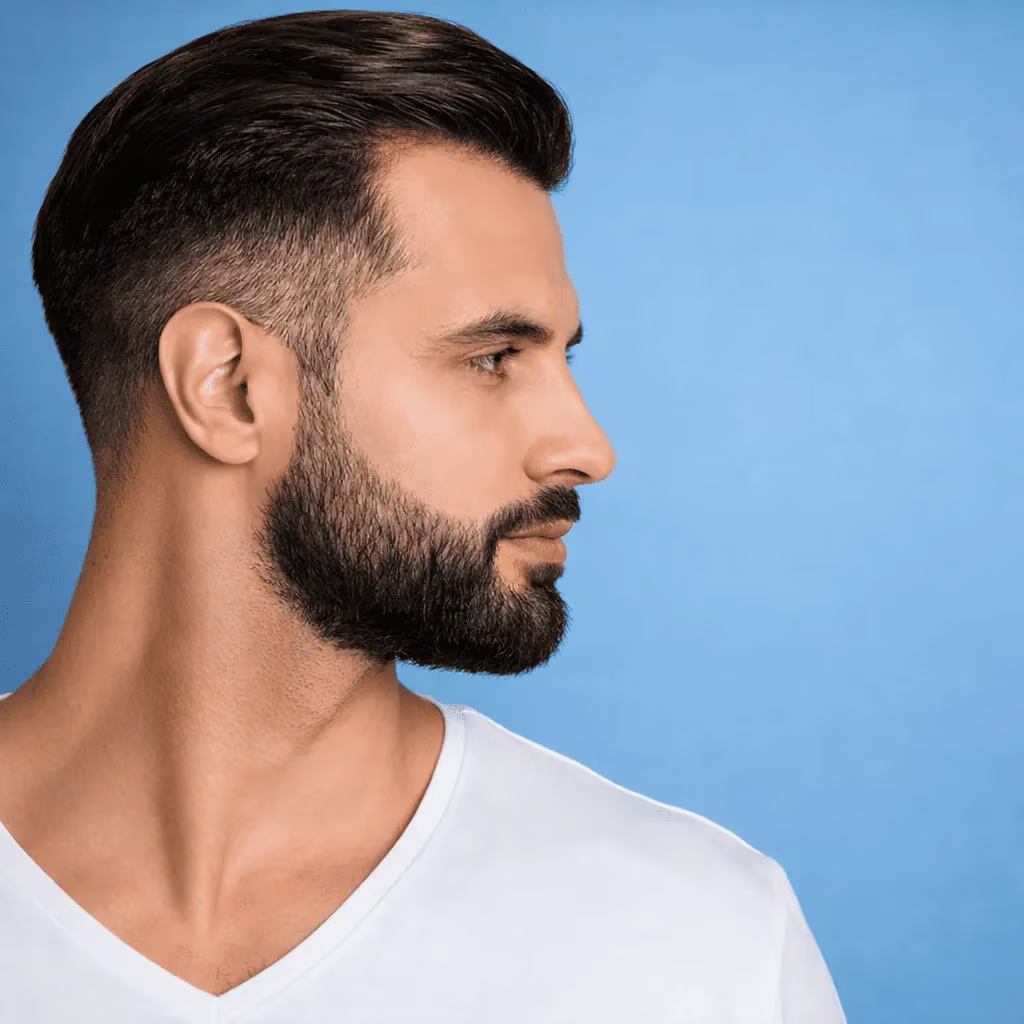
Natural Beard Definition with FUE Transplant Padra Clinic in Dubai
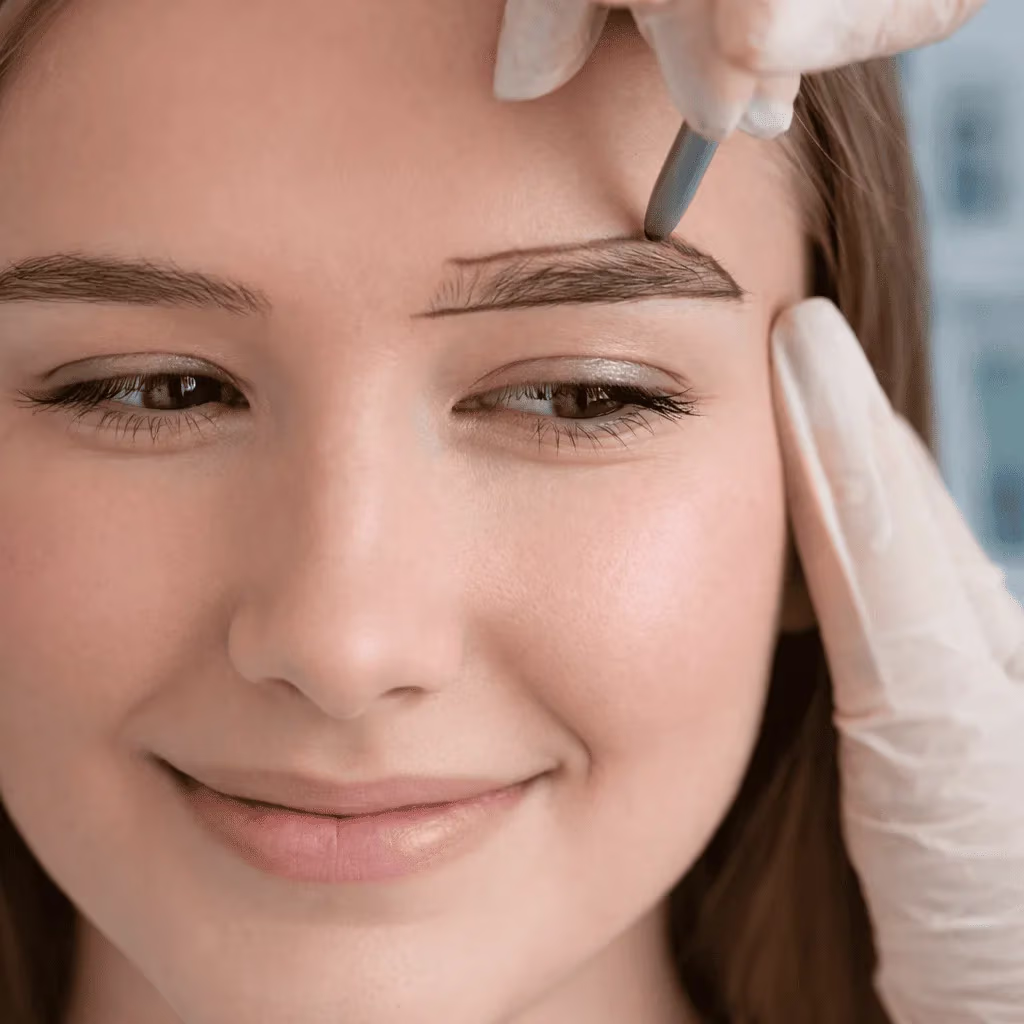
Refined Eyebrow Shaping with NTF Transplant Padra Clinic in Dubai
DHI (Direct Hair Implantation)
DHI represents a more precision-focused implantation technique related to FUE.
Unlike traditional implantation methods, no pre-made channels are required. Using a Choi Implanter Pen, surgeons can implant follicles while controlling depth, angle, and direction.
Because of smaller incisions and careful implantation, swelling and redness may be reduced in some cases, and visual downtime can be shorter depending on the patient and procedure.
DHI for Beard and Eyebrow Restoration
DHI is particularly effective for sensitive facial areas like eyebrows and beard restoration where directional accuracy is essential.
Precise exit angle control, such as low-angle eyebrow implantation, is often easier to achieve using DHI techniques.
This is why many clinics in Dubai and the UAE use DHI for facial hair and hairline refinement procedures.
DHI Case Study
- Client: A media personality experiencing patchy beard loss due to stress-induced alopecia.
- Solution: Non-shaven DHI procedure using 800 grafts. The surgeon replicated the natural beard growth direction using precise implantation angles.
- Result: Return to on-camera work within a few days with minimal visible signs.
Hair Transplant Method Comparison in Dubai
| Feature | Sapphire FUE | DHI |
| Implantation method | Ideal for extensive coverage | Direct implantation |
| Angle control | High | Very high precision |
| Final density | A few days or sooner | Ideal for density refinement |
| Shaving requirement | Partial trimming possible | Non-shaven possible |
| Best use | Extensive scalp loss | Beard, eyebrow, hairline refinement |
| Discretion level | Very high | Very high |
| Return to social activity | Few days | Few days or sooner |
Which Method Has Faster Recovery: FUE or DHI?
Recovery time for FUE and DHI hair transplant in Dubai is generally similar, but DHI may have slightly shorter visible recovery in some cases because it uses smaller incisions and does not require pre-made channels. However, actual recovery depends on graft numbers, scalp condition, and post-operative care rather than the technique alone.
Both FUE and DHI involve follicle extraction from the donor area, so donor healing time is usually similar. The main difference is in the implantation method. Because DHI uses direct implantation with a Choi implanter pen, it may cause less visible redness in some patients, especially in smaller procedures such as hairline, beard, or eyebrow restoration.
In large sessions with many grafts, recovery time between FUE and DHI is often very similar. In modern hair transplant clinics in Dubai, recovery protocols, washing procedures, and regenerative treatments can influence healing time more than the technique itself.
FUE or DHI: Which Method is Right for You?
Choosing between FUE vs DHI for high-profile clients depends on:
- Hair loss pattern
- Donor area capacity
- Lifestyle and recovery expectations
- Privacy and discretion requirements
- Hairline design complexity
- Beard or eyebrow restoration needs
Read More: Hair Restoration and Hair Transplants in Dubai: The Complete Guide
The Exosome Boost: A Biological Accelerator for Growth and Healing
Exosome therapy is a regenerative treatment sometimes used alongside hair transplant procedures in Dubai to support healing, reduce inflammation, and potentially improve scalp environment for hair growth. It is not a replacement for hair transplant, but may be used as a supportive treatment before or after FUE and DHI procedures.
Modern regenerative hair transplant packages in Dubai no longer treat transplantation as a single procedure. Some clinics use a hybrid regenerative approach that focuses on preparing the scalp biologically before and after graft placement to support healing and improve overall scalp condition.
In simple terms, hair follicles can be compared to seeds, and the scalp environment can be compared to soil. Regenerative treatments such as exosome therapy aim to improve the scalp environment where the transplanted follicles grow.
What is Exosome Therapy?
Exosomes are nano-scale vesicles that contain:
- Growth factors
- Proteins
- Lipids
- Nucleic acids
Derived from stem cell research, they function as cellular messengers that may help support tissue repair and cell communication processes.
Exosomes do not create new hair follicles, but they may help improve the environment around existing and transplanted follicles.
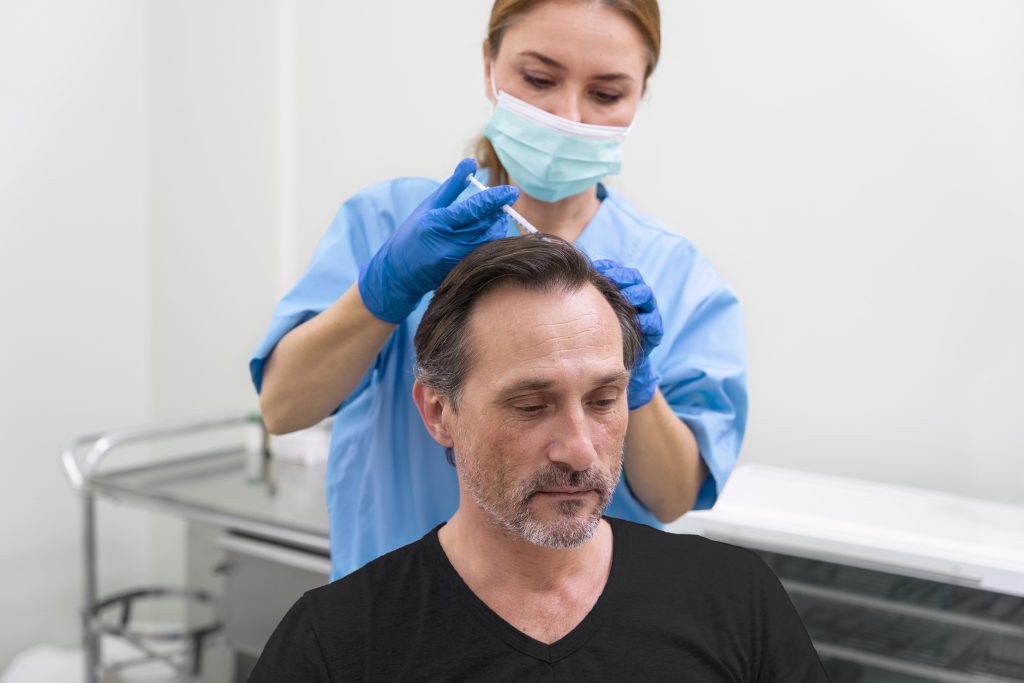
Biological Effects of Exosome Therapy
Exosome therapy is believed to support several biological processes:
Cell signaling: Exosomes may help activate cellular communication and support scalp regeneration processes.
Angiogenesis: They may support the formation of new micro blood vessels, which can help improve blood supply to transplanted grafts.
Inflammation control: Exosomes may help reduce inflammation after hair transplant procedures.
Scalp environment improvement: They may help improve scalp quality in patients with thinning hair.
Results can vary depending on patient biology, procedure quality, and aftercare.
Why Some VIP Clients Choose Exosome Therapy
For private clients and executives, the potential benefits are often related to recovery visibility and scalp condition rather than only hair growth.
Some reasons patients choose regenerative support treatments include:
- Supporting faster visible recovery
- Reducing inflammation after transplant
- Improving scalp condition
- Supporting existing thinning hair
- Reducing shock loss in some cases
- Improving overall hair transplant experience
For some high-profile patients, regenerative treatments are considered part of recovery optimization rather than a separate treatment.
When is Exosome Therapy Used?
Exosome therapy may be used in combination with:
- FUE hair transplant
- DHI hair transplant
- Non-surgical hair restoration treatments
- PRP or other regenerative treatments
- Hair maintenance programs after transplant
It is typically applied either before the procedure, immediately after implantation, or during follow-up treatment sessions.
Innovative Non-Surgical Hair Restoration
Is Exosome Therapy Painful?
Exosome therapy is usually applied through micro-injections or topical application after the hair transplant procedure while local anesthesia is still active.
Most patients report minimal discomfort, although experience can vary depending on injection method and scalp sensitivity.
Impact on Hair Transplant Timeline
Hair transplant results still follow the natural hair growth cycle, which typically takes up to 12 months for final results.
Regenerative treatments may help support early healing and scalp recovery, and some patients may notice earlier improvement in hair thickness or reduced shedding, but timelines vary between patients.
Hair Transplant With vs Without Regenerative Support
| Feature | Standard Hair Transplant | Hair Transplant with Regenerative Support |
| Healing time | Normal healing timeline | May support faster visible healing |
| Graft stability | Depends on procedure | May support graft environment |
| Visible redness | Normal post-op redness | May reduce redness in some patients |
| Final density | Donor dependent | Donor dependent, scalp environment may improve |
| First visible improvement | Month 4–6 | Some patients may notice earlier improvement |
Why Hybrid Regenerative Protocols Matter for Executives
Preparing the scalp biologically can help optimize the healing environment and reduce visible recovery signs in some patients.
For individuals who cannot appear publicly with visible recovery signs, regenerative support treatments may help improve the recovery experience and scalp condition during the healing phase.
For many executives and public figures, the goal is not only hair growth but also:
- Minimal visible recovery
- Controlled healing timeline
- Scalp health improvement
- Long-term hair quality maintenance
In this context, regenerative treatments are often considered part of a broader hair restoration strategy rather than a standalone procedure.
Privacy Protocols for High-Profile Clients
Privacy is one of the main reasons many executives and public figures choose a hair transplant in Dubai. Many premium clinics offer private entrances, confidential scheduling, non-shaven procedures, and restricted medical data access to help ensure that the procedure remains discreet and minimally visible during recovery.
For public figures and executives, the main concern is often not the procedure itself but whether anyone will notice the procedure or the recovery period.
Dubai’s premium hair restoration sector has developed services that focus on discretion, privacy, and minimal visible recovery.
Medical Confidentiality Standards in Dubai Clinics
Clinics in Dubai operate under Dubai Health Authority regulations that include medical data protection and patient confidentiality requirements.
Some premium clinics may also implement additional privacy measures for high-profile patients.
These may include:
- Private clinic entrances
- Separate waiting areas
- Confidential or limited appointment scheduling
- Restricted medical file access
- NDA agreements for staff
- Secure medical data storage systems
In many premium clinics, confidentiality and discretion are considered part of the overall patient experience, especially for executives, public figures, and private clients.
Non-Shaven Hair Transplant for Public Figures
One of the most important techniques for discreet hair transplant procedures is the non-shaven hair transplant technique.
This technique allows surgeons to extract donor grafts from concealed areas so that surrounding hair can cover the donor area during healing.
Benefits of Non-Shaven Hair Transplant
- Less visible donor area during recovery
- Faster visual recovery
- Easier return to work or social activities
- Hair can cover treated areas during healing
- More discreet overall procedure
Non-shaven procedures are often used for:
- Hairline transplant
- Density increase
- Beard transplant
- Eyebrow transplant
- Small or medium sessions
- VIP and executive patients
Rapid Recovery Protocols for Executives
Some advanced clinics design recovery programs that focus on reducing both:
- Biological healing time
- Visible recovery time
For professionals who manage businesses, appear in media, or attend meetings frequently, visible recovery time is often more important than biological healing time.
Recovery protocols may include:
- Special washing protocols
- Scalp care treatments
- Regenerative treatments
- Follow-up monitoring
- Styling guidance during recovery
- Short stay treatment planning
The goal is to help patients return to normal social and professional activities as soon as possible while healing continues.
Nova Voya’s Role in Confidential Medical Travel Planning
While all medical procedures are performed by licensed clinics and surgeons, Nova Voya’s role within the medical tourism process is focused on treatment planning, clinic selection, and patient experience coordination, especially for private and high-profile clients.
This may include:
- Identifying clinics that follow strong confidentiality protocols
- Selecting clinics experienced with VIP and executive patients
- Planning treatment timelines to minimize time away from work
- Assisting with travel and accommodation planning
- Coordinating discreet appointment scheduling
- Supporting communication between the patient and the clinic
- Helping design a private recovery plan
Within this framework, Nova Voya acts as a treatment planning and clinic selection platform, helping patients choose clinics and treatment pathways that match their privacy, recovery, and quality expectations.
Seeking World-Class Medical Care in Dubai? 🏥
Nova Voya helps international patients seamlessly navigate advanced healthcare in Dubai. We connect you with top-tier medical specialists and accredited hospitals tailored precisely to your unique healthcare needs, ensuring a smooth, safe, and stress-free medical journey.
- ✔ Personalized matching with leading medical experts and premier facilities
- ✔ Full support with medical coordination, second opinions, and logistics
- ✔ Independent, honest guidance focused entirely on your health goals
*Medical tourism guidance, not clinical advice
Discretion as Part of Modern Hair Restoration in Dubai
In modern hair restoration, especially for executives and public figures, the standard of care often includes:
- Natural-looking results
- Minimal visible recovery
- Confidential scheduling
- Discreet clinic access
- Non-shaven techniques when appropriate
- Recovery planning
- Private treatment pathways
Within Dubai’s medical tourism environment, discretion has become one of the important decision factors for professionals, investors, executives, and public figures considering hair restoration.
If you would like to explore carefully selected treatment options that follow these privacy and quality standards, you can review our curated hair restoration packages below.
Why Dubai Is a Leading Destination for High Density Hair Restoration
Dubai has become a leading destination for hair transplant and hair restoration due to regulated clinics, international surgeons, advanced techniques such as FUE and DHI, strong medical tourism infrastructure, and discreet treatment options for international and high-profile patients.
Choosing Dubai for hair restoration often means choosing a medical system designed to reduce uncertainty, treatment delays, and travel complexity. For many professionals and international patients, reliability and planning efficiency are often more important than price alone.
World-Class Medical Infrastructure
Many hair transplant clinics in Dubai operate under regulatory frameworks and quality control requirements. Clinics often focus on:
- Modern surgical equipment
- Sterilization and hygiene protocols
- Documented clinical procedures
- International patient services
- Follow-up and aftercare programs
For many patients, this means choosing a system and process, not only a single surgeon.
Global Medical Talent and Experience
Dubai attracts surgeons and medical teams with international training and experience working with patients from different ethnic backgrounds and hair types.
This is particularly important in hair restoration because:
- Hair characteristics differ by ethnicity
- Hairline design differs by facial structure
- Density expectations differ by patient profile
- Beard and eyebrow restoration require different techniques
Because of this, hair restoration in Dubai often involves experience with a wide variety of hair types and aesthetic expectations.
Value vs Cost Perspective
Many high-level clients evaluate the cost of a poor result, not just the price of the procedure.
A poor hair transplant may require:
- Correction procedures
- Additional graft sessions
- Time away from work
- Visible recovery again
- Additional travel
- Psychological stress
For this reason, many patients consider hair transplant as a long-term investment in appearance and confidence, rather than a short-term cost decision.
Recovery Experience as Part of Treatment
For international patients, recovery is also part of the treatment experience.
Dubai offers an environment where patients can recover privately while staying in hotels or private accommodation.
Recovery planning may include:
- Short stay treatment plans
- Private hotel recovery
- Follow-up visits
- Remote aftercare communication
- Controlled return to work schedule
For some high-profile individuals, temporary distance from their normal work environment may help them complete the recovery period more discreetly.
Global Accessibility
Dubai is a major international travel hub, which makes medical travel planning easier for many international patients.
Advantages include:
- Direct international flights
- Large international airport
- Flexible travel scheduling
- Medical tourism infrastructure
- English-speaking medical staff
- Short-stay treatment planning
For many patients, hair transplant travel to Dubai can be planned similarly to a short business trip.
SEARCH BOX: PROVIDERS LIST
Common Myths About Hair Transplant in Dubai
| Common Myth | The Reality |
| Hair transplant in Dubai is only about appearance | For many executives and high-profile patients, the main priorities also include privacy, minimal visible recovery, and natural-looking results |
| DHI is always better than FUE | DHI is often preferred for precision areas like the hairline, beard, and eyebrows, while FUE is usually better for larger coverage and high graft numbers |
| Non-shaven hair transplant works for every patient | Non-shaven procedures can be a strong option for discreet recovery, but suitability depends on hair loss pattern, donor area, and treatment goals |
| Exosome therapy guarantees faster growth | Exosome therapy may support healing and scalp recovery in some patients, but results vary and it does not replace the normal hair growth cycle |
| Hair transplant in Dubai is only for celebrities or ultra-luxury patients | Dubai offers a wide range of regulated clinics and treatment options, and many patients choose it for planning efficiency, privacy, and international accessibility |
Summary
Modern hair restoration in Dubai combines advanced techniques such as FUE and DHI with regenerative treatments and recovery planning strategies designed to support natural-looking results and minimal visible recovery. Hairline design, density planning, and beard or eyebrow restoration can be performed using different techniques depending on the patient’s hair loss pattern, donor area, and lifestyle requirements.
Discretion is an important factor for many patients, especially executives, business owners, and public figures. Non-shaven techniques, private scheduling, and recovery planning can help reduce visible signs of the procedure during healing. Dubai’s regulated clinics, experienced surgeons, and medical tourism infrastructure make it a practical option for many international patients considering hair restoration.
For many patients, hair restoration is not only a cosmetic procedure but also an investment in appearance, confidence, and professional presence.
Culturally Vetted Medical Packages 🏥
Navigate your medical journey with confidence. Nova Voya partners exclusively with clinics that understand the needs of international patients, ensuring a respectful and seamless experience.
Start Your Journey
Secure your preferred dates with our culturally tailored packages.
View Medical Packages →*Verified Clinics Only
Considering your professional image and public presence, how important is a discreet and natural-looking hair restoration process for you?
FAQs
A hair transplant procedure usually takes between 4 to 8 hours depending on the number of grafts, the technique used (FUE or DHI), and the size of the treatment area. Larger sessions may sometimes be split into multiple days.
The number of grafts required depends on the extent of hair loss, donor area capacity, hair thickness, and desired density. Some patients may need 1,500 grafts for hairline restoration, while larger cases may require 3,000–4,000 grafts or more.
Hair transplant results follow the natural hair growth cycle. New hair growth often begins around 3–4 months after the procedure, with visible improvement continuing between 6–12 months.
Good candidates for a hair transplant are individuals with a stable hair loss pattern, sufficient donor hair, and realistic expectations. A medical consultation is required to determine whether a patient is suitable for the procedure.
Yes, some patients may undergo more than one hair transplant procedure depending on hair loss progression, donor area capacity, and desired density. Additional sessions are sometimes used for density improvement or crown coverage.
Non-shaven hair transplant is not suitable for all patients. It is usually recommended for smaller sessions, hairline procedures, or patients who want a more discreet recovery, but suitability depends on donor area, hair density, and treatment goals.
Both FUE and DHI can produce natural-looking results when performed by experienced surgeons. Natural appearance depends more on hairline design, angle, density planning, and surgical experience than on the technique alone.
Exosome therapy usually involves minimal downtime. Some patients may experience mild redness or scalp sensitivity for a short period, but many people can return to normal daily activities the same day depending on the treatment method and individual response.
Exosome therapy is a regenerative treatment that is still being studied in several medical fields. When performed by qualified medical professionals, it is generally considered a minimally invasive supportive treatment, but patients should consult a licensed medical professional to determine suitability.
Some premium hair transplant clinics in Dubai offer privacy-focused services such as private consultation rooms, confidential scheduling, non-shaven procedures, restricted access to medical records, and confidentiality agreements for staff. These measures help make the treatment process more discreet.