

You look in the mirror, and something feels off. Not dramatically different but the face looking back at you has changed. You cannot point to exactly when it happened. Ageing does not announce itself. It just arrives.
This is one of the most common and deeply felt concerns people bring to aesthetic clinics around the world. The desire to look like yourself again, the version of you that felt energised, defined, and confident.
The good news is that science now understands why this happens and, more importantly, what can be done about it.
This article explains the biology behind facial ageing, and the clinical evidence behind one of the most advanced treatments available today: poly-L-lactic acid (PLLA), the active ingredient in Sculptra. You will learn how it works, what the research shows, who it is best for, and what you can realistically expect.
- Key Takeaways: (TL;DR)
- Why Collagen Loss Matters: What Happens to Skin as We Age
- What Is PLLA and Why Does It Matter?
- Sculptra in Combination with Other Treatments
- Common Myths About Sculptra (PLLA)
- Summary
- FAQs
Key Takeaways: (TL;DR)
- Not Just a Filler, a Biostimulator: Unlike traditional hyaluronic acid fillers that mechanically fill space from the outside, Sculptra (PLLA) acts as a biological scaffold that triggers the body to rebuild its own collagen from within.
- 4-Phase Regenerative Process: PLLA initiates a precise cellular cascade; recruiting healing immune cells, activating collagen genes, and progressively densifying the skin matrix.
- Gradual & Long-Lasting Results: Because the changes rely on natural tissue growth, results appear subtly over weeks and peaks at 3 to 6 months. The structural rejuvenation lasts up to 2 to 3 years, outperforming conventional fillers.
- A Solution for “Ozempic Face”: Sculptra has emerged as a premier clinical solution for post-GLP-1 weight loss patients, effectively restoring structural density to rapid facial fat loss and skin laxity without overfilling.
- The Prejuvenation Trend: It is not just for older skin; clinical evidence highlights PLLA as an effective “prejuvenation” strategy for younger patients to maintain dermal integrity and delay structural aging.
- Modern Safety Protocols: Third-generation PLLA utilizes uniform microspheres and high-dilution protocols (using cannulas), which have drastically minimized older risks like delayed nodules and papules.
- Synergistic Multi-Layer Treatment: Research shows PLLA works exceptionally well in combination with energy-based devices (lasers/RF) and HA fillers, offering a comprehensive approach to multi-level facial restoration.
- Non-Reversible Choice: Unlike HA fillers, Sculptra cannot be dissolved. This underscores the critical importance of choosing a highly skilled, DOH-licensed specialist in a controlled clinical environment.

Dr. Erfan Rahmani
Aesthetic Physician · 5+ Years Experience
Why Collagen Loss Matters: What Happens to Skin as We Age
As we get older, the skin loses something very important: collagen.
Collagen is the protein that gives skin its firmness and structure. Without enough of it, skin becomes thinner, looser, and less smooth.
At the same time, the fat tissue under the skin begins to shrink. This causes the face to look flatter or deflated in areas like the cheeks and temples. Lines deepen, and the overall shape of the face starts to change.
Why Old-Style Fillers Have Limits
Traditional fillers, like hyaluronic acid (HA) products, work by adding volume directly. They can produce immediate results, but they do not address the root cause of ageing: the loss of collagen and skin density.
The 2025 systematic review confirms that, unlike conventional fillers, PLLA does not simply fill a space. It actively encourages the body to produce its own new collagen, a process called neocollagenesis.
The Rise of Biostimulators
This is where biostimulators come in. A biostimulator is a substance that stimulates the body’s own natural processes rather than replacing them with an external material.
PLLA is the leading example of this category. The review notes that its ability to stimulate Type I collagen production, modulate immune cell responses, and remodel the extracellular matrix (the structural framework inside the skin) places it at the centre of the new era of intelligent, personalised skin regeneration.
What Is PLLA and Why Does It Matter?
For a long time, facial treatments focused on one simple idea: fill the space. If you had a hollow cheek or a deep line, you filled it. The result was often quick but temporary.
Today, the approach is changing. Instead of just adding volume, modern treatments aim to rebuild the skin from the inside. This is called regenerative aesthetics, and PLLA is one of its most important tools.
PLLA stands for poly-L-lactic acid. It is a synthetic, biodegradable, and biocompatible polymer, meaning it is man-made, it breaks down naturally in the body, and it does not cause harmful reactions.
According to the 2025 systematic review, PLLA is now recognised as a biologically active scaffold, not just a filler, that triggers a series of natural events inside the skin to restore its density, firmness, and quality over time.
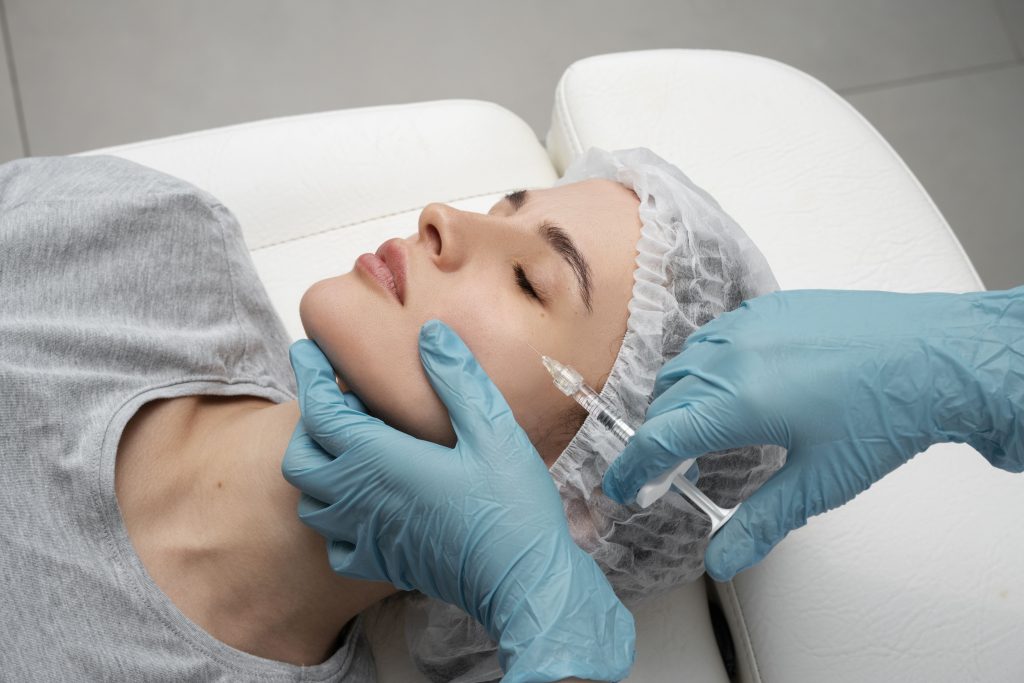
Poly-L-Lactic Acid: What PLLA Is Made Of
PLLA is a synthetic polymer made of microscopic particles called microspheres. In its most modern form (third-generation PLLA), these microspheres are uniform in size, typically between 40 and 63 micrometres. This uniformity helps the product distribute evenly in the skin and reduces the risk of side effects.
When injected, the PLLA particles break down through a process called hydrolysis, and they slowly dissolve into lactic acid, which the body then processes naturally. As this happens, something remarkable takes place: the body starts rebuilding.
The Regenerative Cascade: Step by Step
The 2025 review describes a clear, four-phase biological process that begins the moment PLLA is injected:
Phase 1: Days 1 to 7
Immune Cell Recruitment: The body detects the PLLA particles as something new and sends in immune cells called macrophages and monocytes. Importantly, PLLA guides these macrophages toward a healing role (called M2 polarisation) rather than an inflammatory one. These cells release signalling molecules.
Phase 2: Weeks 2 to 6
Fibroblast Activation: The signalling molecules sent out in Phase 1 now activate skin cells called fibroblasts. These cells are responsible for making collagen. They begin producing new Type I collagen and other important structural proteins like fibronectin and elastin. Studies using human skin models confirmed this activation at the gene level; the genes COL1A1, COL3A1, fibronectin, and elastin are all switched on.
Phase 3: Weeks 6 to 16
Collagen Maturation: The new collagen fibres become more organised and cross-linked. This means the skin gains real structural strength, not just temporary bulk.
Phase 4: Up to 24 Months
Stabilisation and Ongoing Renewal: The remodelling process continues for up to two years. The tissue response during this phase includes restored dermal density, improved biomechanical integrity, and long-term functional rejuvenation of the skin.
The review also notes that as PLLA degrades, it creates a mildly acidic microenvironment that further supports prolonged fibroblast activity and ECM (extracellular matrix) production.
What the Science Shows Under a Microscope
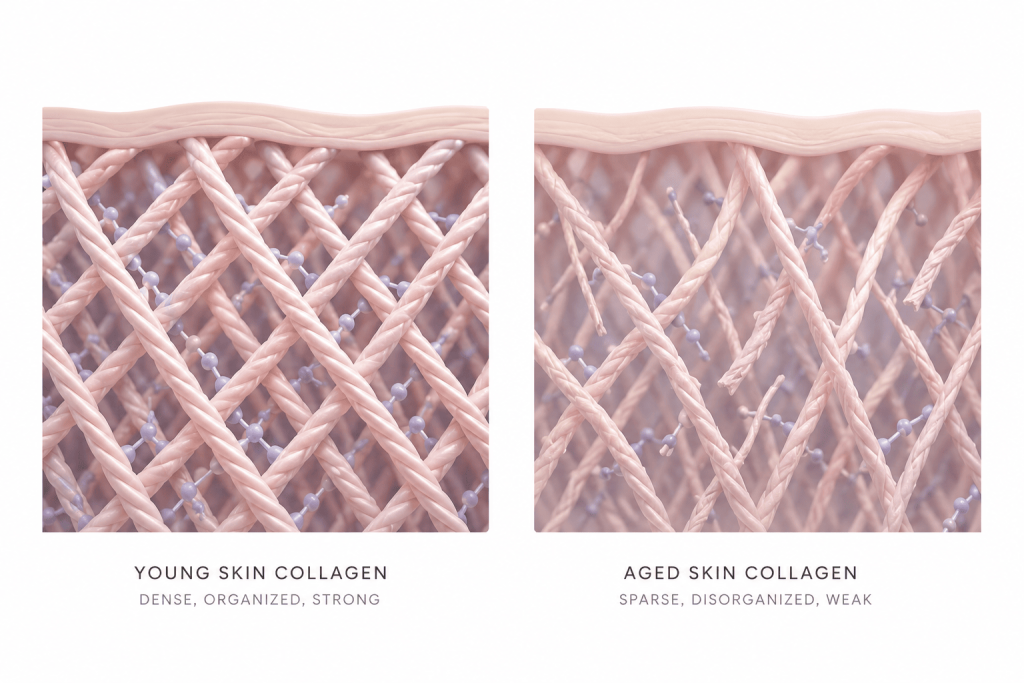
Histological studies (tissue analysis under a microscope) confirm these changes. Skin samples taken after PLLA treatment show:
- Denser, more organised collagen bundles
- Increased Type I collagen content
- Collagen fibres that are better aligned and cross-linked, supporting improved skin tensile strength
- Increased dermal thickness visible on high-frequency ultrasound (20 MHz) within 12 weeks of treatment
- Denser dermal architecture is visible on optical coherence tomography (OCT)
FDA Approval and Working in Regulated Settings
PLLA was originally approved by the US Food and Drug Administration (FDA) for treating HIV-related facial fat loss. Over time, as clinical evidence grew, its use expanded significantly into general aesthetic facial rejuvenation.
The review confirms that regulatory recognition and the growth of clinical evidence have gone hand in hand, the more studies confirmed PLLA’s safety and effectiveness, the wider its use has become.
Why a Supervised Clinical Setting Matters
The 2025 review is clear on one point: the outcomes of PLLA treatment depend heavily on the skill and training of the practitioner. High-dilution protocols, correct injection planes, and the use of blunt-tipped cannulas are all evidence-based practices that significantly reduce risk. These require proper training and a fully equipped clinical environment.
For patients in Abu Dhabi, choosing a DOH-licensed clinic with a physician experienced in biostimulator treatments is a critical step in ensuring safe and effective outcomes.
Who Is an Ideal Candidate?
According to the review, PLLA is suitable for a wide range of patients, including:
- Middle-aged individuals experiencing facial volume loss and skin laxity
- Those who want natural-looking, gradual results rather than an immediate transformation
- Post-bariatric or post-partum patients experiencing skin sagging
- Younger patients are interested in prejuvenation, early treatment to prevent or delay the visible signs of structural ageing
- Patients who have undergone GLP-1 agonist therapy (such as semaglutide) and are experiencing rapid facial fat loss and skin laxity, a concern the review describes as “Ozempic face”
For older patients, PLLA works to restore dermal matrix components and enhance tissue resilience. For younger patients, it helps maintain existing firmness by supporting the skin’s natural collagen production.
Dr. Erfan Rahmani
Aesthetic Physician · 5+ Years Experience
What to Expect After Treatment
- Mild swelling, redness, or bruising may appear immediately after treatment. This is normal and temporary
- These side effects typically resolve quickly
- Collagen rebuilding begins in the weeks following treatment and continues for months
Maintenance
While not the primary focus of the review, the biological evidence supports that maintaining results involves:
- Completing the full recommended course of sessions (typically 3 to 4)
- Protecting skin from UV exposure and oxidative stress
- Maintaining good hydration and skin health practices between sessions
The regenerative process PLLA initiates does not switch off abruptly. The collagen produced continues to support skin density for months and even years after the final session.
Sculptra in Combination with Other Treatments
Synergistic Approaches
PLLA does not have to be used alone. The review confirms its compatibility with several complementary treatments:
1. With energy-based devices (fractional CO₂ lasers, microneedling, radiofrequency, ultrasound):
- These can be used before PLLA to prepare the dermis through heat shock protein expression
- They increase tissue receptivity to PLLA and may accelerate collagen deposition
- A study cited in the review (Ibrahim et al.) reported a 47% reduction in wrinkle severity when the fractional laser was combined with topical PLLA
2. With microneedling:
- When performed before or after PLLA application, microneedling improves product distribution and may enhance immune cell access to the microparticles
3. With hyaluronic acid (HA) fillers, “biostimulatory layering”:
- HA fillers provide immediate volume and shape
- PLLA works in parallel to promote long-term dermal remodelling
- The result is both immediate aesthetic improvement and lasting structural renewal
A case report included in the review found that diluting PLLA with a hyaluronic acid biorevitaliser led to enhanced facial volume restoration and skin texture improvement, suggesting a synergistic effect when combining these treatments.
Recommended Approach for Combination Treatment
The review notes that energy-based devices are best used before PLLA to prime the skin. When layering PLLA with HA fillers, clinicians can address both the structural support layer (deep, with PLLA) and surface contour (with HA). This allows a comprehensive, multi-level approach to rejuvenation.
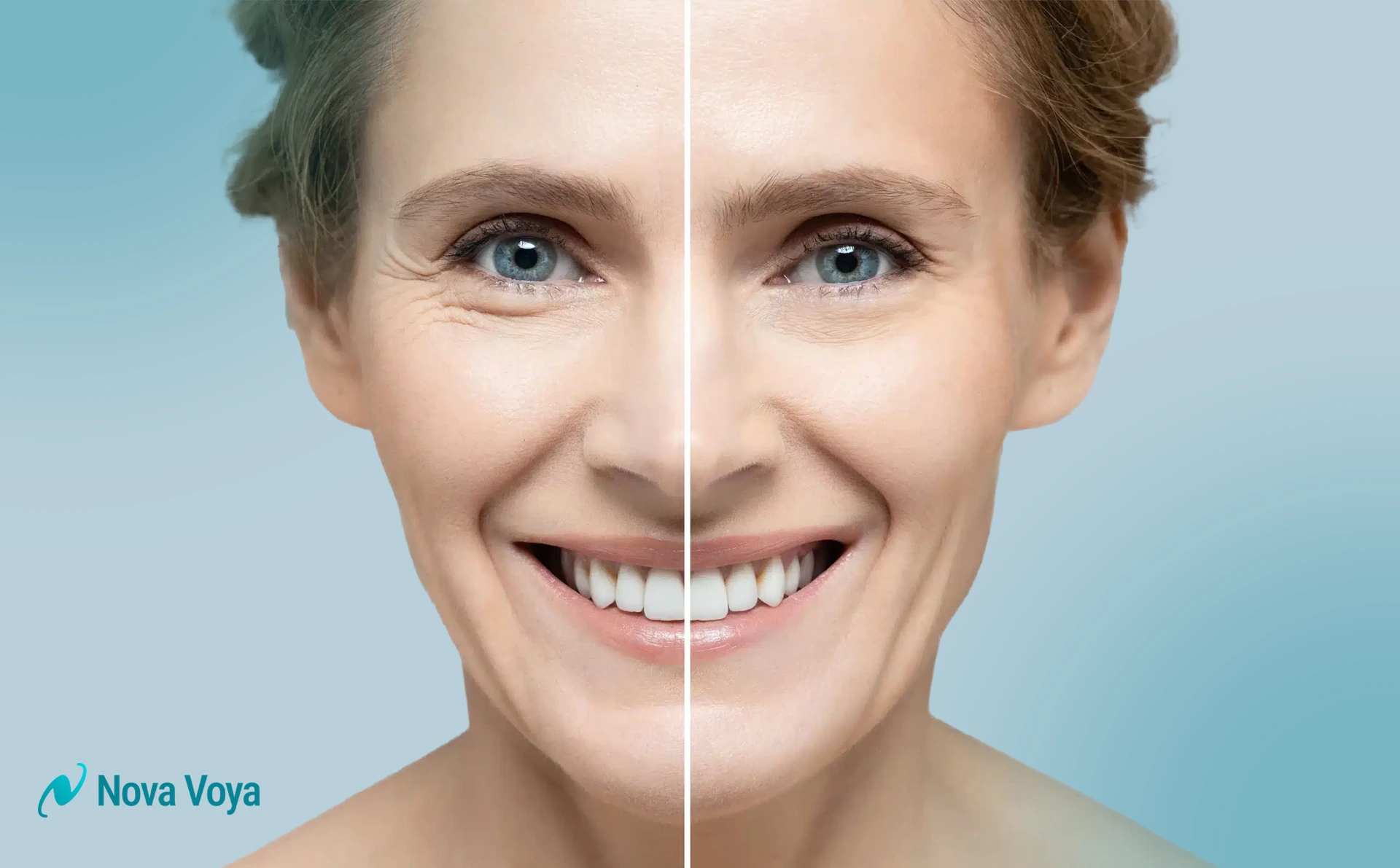
Sculptra Glow: Collagen Rejuvenation & Volume Restoration
Common Myths About Sculptra (PLLA)
| Common Myth | The Reality |
| Sculptra is a biostimulator, not a filler. Results develop gradually over weeks and months as your own collagen rebuilds; peak results typically appear 3 to 6 months after treatment | The 2025 systematic review specifically highlights its use in younger patients as a prejuvenation strategy, stimulating collagen before significant structural ageing begins |
| Sculptra is only for older patients with severe volume loss | More sessions mean something is wrong with the treatment |
| Multiple sessions (typically 2 to 4) are by design, not a sign of failure; each session builds on the last, and results continue improving between appointments | With modern high-dilution protocols and blunt-tipped cannula techniques, the rate of nodule formation has decreased significantly. This complication is largely linked to outdated methods |
| Sculptra nodules are common and hard to avoid | The collagen produced by Sculptra is real structural tissue; it supports skin density for up to 2 to 3 years, and the regenerative process does not stop abruptly after treatment ends |
| Once results fade, you are back to square one | The 2025 review is clear: outcomes depend heavily on practitioner skill, correct dilution, injection depth, and technique. An experienced, DOH-licensed physician is essential for safe results |
| Any injector can administer Sculptra safely | Fillers physically fill space from the outside; Sculptra triggers your skin to build new collagen from within. They work at different biological levels and can be used together for complementary effects |
| Sculptra and fillers do the same job | Fillers physically fill space from the outside; Sculptra triggers your skin to build new collagen from within, they work at different biological levels and can be used together for complementary effects |
Summary
PLLA has moved well beyond its original role as a volumiser. Based on 63 clinical studies reviewed in 2025, the evidence confirms that PLLA:
- Initiates a precise, four-phase biological regenerative process
- Stimulates the body’s own collagen production through M2 macrophage polarisation and fibroblast activation
- Produces measurable improvements in dermal density, firmness, and texture
- Offers results lasting up to 2 to 3 years
- Works across the face and body
- Has a strong and improving safety record when used with modern protocols
- Complements other aesthetic treatments for enhanced outcomes
For patients seeking natural, gradual, science-backed rejuvenation, PLLA is one of the most well-evidenced options available today.
If you are interested in experiencing the clinically validated benefits of Sculptra (PLLA) in a professional, supervised setting, the Sculptra Glow programme is available at Natural Health Medical Centre in MBZ City, Abu Dhabi, performed by Dr Erfan Rahmani, a specialist in aesthetic and non-surgical facial rejuvenation, under DOH supervision.
Seeking World-Class Medical Care in Dubai? 🏥
Nova Voya helps international patients seamlessly navigate advanced healthcare in Dubai. We connect you with top-tier medical specialists and accredited hospitals tailored precisely to your unique healthcare needs, ensuring a smooth, safe, and stress-free medical journey.
- ✔ Personalized matching with leading medical experts and premier facilities
- ✔ Full support with medical coordination, second opinions, and logistics
- ✔ Independent, honest guidance focused entirely on your health goals
*Medical tourism guidance, not clinical advice
Have you noticed changes in your face that fillers alone did not fix, or are you considering Sculptra for the first time?
FAQs
First improvements typically appear after the second session, with peak results at 3 to 6 months post-treatment.
Up to 2 to 3 years, significantly longer than hyaluronic acid fillers, which typically last 6 to 18 months.
Most patients need 2 to 4 sessions, spaced 4 to 6 weeks apart, to achieve optimal results.
The treatment is well-tolerated with no downtime; mild swelling or bruising may occur and resolve within a few days.
No, unlike HA fillers, Sculptra cannot be dissolved, which makes choosing an experienced, qualified practitioner especially important.
Yes, the 2025 review specifically highlights its use in younger patients as a prejuvenation strategy to delay structural ageing.
Fillers add volume immediately from the outside; Sculptra stimulates your skin to build its own collagen gradually from within.
Scientific Source: This article is based on peer-reviewed research by Diala Haykal, Alessandra Haddad, Hugues Cartier, and Luiz Avelar, “Poly-L-Lactic Acid in Aesthetic Dermatology…”, published in Aesthetic Surgery Journal, 2025, Vol. 45(10), pp. 1065–1072. DOI: https://www.elenamartin.ro/wp-content/uploads/2025/10/sjaf121.pdf